Loading
institutionsInstitution

Cancer Research UK
Cancer Research UK is the world's largest independent cancer research charity, funding the Crick, ICR, Manchester, Cambridge, and the STAMPEDE and TRACERx trials.
Overview
Cancer Research UK is the world's largest independent cancer research charity, spending over four hundred million pounds a year and funding the Crick, the Institute of Cancer Research and the Manchester and Cambridge institutes, as well as trials including STAMPEDE, TRACERx, Add-Aspirin, BILCAP and INTERLACE. It runs the CRUK Centres network, the Cancer Grand Challenges with the NCI, clinical trials units and the British Journal of Cancer, and its commercial arm Cancer Research Horizons has its own record; Charles Swanton, Caroline Dive, Michelle Mitchell and Dame Deborah James are among the people linked. OnCo connects it to bottlenecks on funding that follows fashion, neglected metastasis research and no incentive to repurpose cheap drugs. Whether a charity can fund infrastructure that governments will not is the standing question. Its research infrastructure page names four core-funded institutes (the Cancer Research UK Scotland Institute in Glasgow, the Cambridge Institute, the Manchester Institute and the Francis Crick Institute) and seven centres (Cambridge, City of London with King's College London, UCL, Barts and the Crick, Convergence Science with the Institute of Cancer Research and Imperial College London, Manchester, Newcastle, Oxford and Scotland across Edinburgh and Glasgow); those with records are linked below, as are the centre directors OnCo lists and the trials whose sponsor field names the charity. The Bowelbabe Fund is linked below.
Location
London, GB
Type
consortium
Website
Newsweek 2026 oncology rank
Not in top 300 listing used
OnCo score
#4 · 226 points (0 Newsweek + 0 NCI + 226 from 113 linked objects) · ranking
- Cancer Grand Challenges
- CRUK Centres
- Clinical Trials Units
Axel Behrens
Director, Cancer Research UK Convergence Science Centre
Cancer biologyConvergence scienceResearch centre leadership
Cancer biologist who directs the Cancer Research UK Convergence Science Centre, the joint Institute of Cancer Research and Imperial College London programme bringing engineering and physical sciences into cancer research.
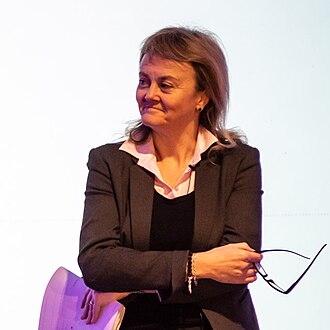
Caroline Dive
Director, Cancer Research UK Manchester Institute; Professor of Cancer Pharmacology
Liquid biopsyCirculating tumour cellsSmall-cell lung cancer models
Built small-cell lung cancer models from circulating tumour cells and leads the Manchester institute.
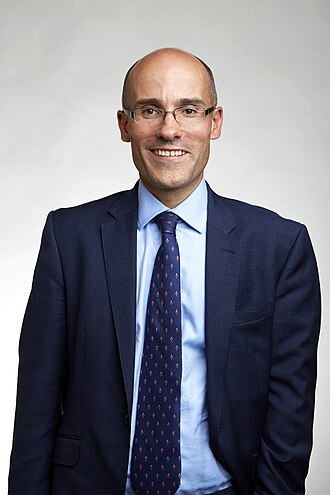
Charles Swanton
Deputy Clinical Director, Francis Crick Institute; Chief Clinician, Cancer Research UK
Tumour evolutionLung cancerCirculating tumour DNA
Leads TRACERx, the study that follows lung cancers as they evolve, and showed how air pollution can trigger lung cancer without new mutations.

Dame Deborah James
"Bowelbabe": patient, broadcaster and fundraiser for bowel cancer research
Colorectal cancerEarly-onset bowel cancerCancer fundraising
Diagnosed with bowel cancer at 35, she spent five years telling people to check their poo, co-hosted the BBC's You, Me and the Big C, and raised over £11 million for Cancer Research UK in the weeks before her death in 2022.
Iain Foulkes
Executive Director of Research and Innovation, Cancer Research UK
Research strategyTranslational fundingInnovation partnerships
Iain Foulkes directs the research portfolio of Cancer Research UK.
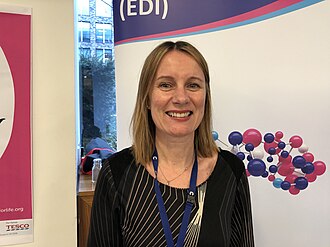
Michelle Mitchell
Chief Executive, Cancer Research UK
Charity leadershipResearch funding strategyCancer policy
Michelle Mitchell is chief executive of the world's largest independent cancer research charity.
Peter Sasieni
Professor of Cancer Epidemiology, Queen Mary University of London; Director, Cancer Prevention Trials Unit
Cervical screeningHPV vaccination evaluationScreening trial design
Epidemiologist who showed HPV vaccination has nearly eliminated cervical cancer in vaccinated English women and leads NHS-Galleri.
Rebecca C. Fitzgerald
Director, Early Cancer Institute, University of Cambridge; Professor of Cancer Prevention
Oesophageal cancer early detectionBarrett's oesophagusNon-endoscopic sampling
Invented the Cytosponge, a swallowable sponge-on-a-string that finds Barrett's oesophagus without endoscopy.
Ruth Plummer
Professor of Experimental Cancer Medicine, Newcastle; Clinical Advisor, Cancer Research UK
Early-phase trialsDNA repair inhibitorsExperimental cancer medicine
Ruth Plummer is an early-phase trialist who ran the first-in-human study of a PARP inhibitor.
Tariq Enver
Director, Cancer Research UK City of London Centre
Cancer biotherapeuticsStem cell and leukaemia biologyResearch centre leadership
Scientist who directs the Cancer Research UK City of London Centre, the multi-institution London hub for cancer biotherapeutics research.
Owen Sansom
Scientific Director, CRUK Scotland Centre
Colorectal cancer biologyPancreatic cancerWnt signalling
Glasgow cancer biologist who directs the CRUK Scotland Institute and is Scientific Director of the CRUK Scotland Centre, known for mouse models of colorectal and pancreatic cancer.
Charlie Gourley
Clinical Director, CRUK Scotland Centre
Ovarian cancerMedical oncologyGynaecological cancer genomics
Edinburgh medical oncologist and ovarian cancer researcher who is Clinical Director of the CRUK Scotland Centre.
Mark Middleton
Director, Oxford Cancer (co-director with Tim Elliott and Adam Mead)
Experimental cancer medicineMelanomaUpper gastrointestinal cancer
Medical oncologist who co-directs Oxford Cancer, the city-wide partnership between the University of Oxford and Oxford University Hospitals.
rctLancet 2025changed practice
Ibrutinib and rituximab versus immunochemotherapy in patients with previously untreated mantle cell lymphoma (ENRICH): a randomised, open-label, phase 2/3 superiority trial
The authors' conclusion is that ibrutinib-rituximab should be considered a new standard-of-care option for first-line treatment of older patients with mantle-cell lymphoma. The subgroup split means it is clearly better than R-CHOP and roughly equivalent to bendamustine-rituximab.
rctAnnals of Oncology 2023166 citations
Results of the c-TRAK TN trial: a clinical trial utilising ctDNA mutation tracking to detect molecular residual disease and trigger intervention in patients with moderate- and high-risk early-stage triple-negative breast cancer
The first prospective test of acting on ctDNA in triple-negative disease, and a negative one: with a quarterly, single-mutation assay the window between detectable DNA and visible metastasis was too short to intervene. Later designs use tumour-informed assays, earlier sampling and drugs with more single-agent activity.
translationalNature 2023288 citations
TRACERx 421: the full-cohort picture of how lung cancer evolves and which subclones drive relapse
Relapse after surgery is driven by particular subclones that can be identified in the primary tumour and tracked in blood, which argues for evolution-aware adjuvant strategies. The pollution finding reframes carcinogenesis: some agents promote already-mutant cells rather than causing mutations.
rctThe Lancet 2017changed practice276 citations
Long term effects of once-only flexible sigmoidoscopy screening after 17 years of follow-up
Durability is what makes endoscopic screening cost-effective: one procedure at 55 buys nearly two decades of protection, which is the argument for long intervals rather than frequent tests.
rctNew England Journal of Medicine 2017changed practice1,340 citations
STAMPEDE: adding abiraterone to hormone therapy at diagnosis of advanced prostate cancer
Men diagnosed with prostate cancer that has already spread, or that is locally advanced and high risk, should start abiraterone (or another androgen-receptor pathway inhibitor) at the same time as testosterone suppression rather than waiting for resistance. This roughly halves the risk of death over several years. The same platform later showed that docetaxel chemotherapy and, in high-volume metastatic disease, triple therapy also help, and that abiraterone benefits men with high-risk disease treated with radiotherapy.
translationalNew England Journal of Medicine 20171,945 citations
TRACERx first 100: tracking how lung cancers evolve, and how chromosomal chaos predicts relapse
Lung cancers keep evolving after they form, and it is ongoing chromosomal instability rather than the number of mutations that best predicts who will relapse. This gives a rationale for targeting the earliest (clonal) drivers and neoantigens and for tracking evolution in blood after surgery.
observationalBritish Journal of Cancer 201460 citations
Ethnicity and outcome of young breast cancer patients in the United Kingdom: the POSH study
The UK's own evidence that the disparity is not only American and not only about access: within the NHS, with equal chemotherapy use, young Black women had more triple-negative disease and worse survival. It anchors the disparities idea on the triple-negative page and the UK and NHS page.
meta analysisThe Lancet 2012changed practice1,530 citations
Comparisons between different polychemotherapy regimens for early breast cancer: meta-analyses of long-term outcome among 100,000 women in 123 randomised trials
Chemotherapy works in receptor-negative disease at least as well as in receptor-positive disease in proportional terms, and because triple-negative absolute risk is high the absolute gain is large; this is why anthracycline and taxane backbone survived into KEYNOTE-522 and why SCARLET now asks whether the anthracycline can go.
Similar pages
- InstitutionNational Cancer Institute (NIH)
Shares Publish per-patient trial cost benchmarks and target halving them, A public registry of unanswered clinical questions linked to funding calls, Disclose R&D and manufacturing costs of publicly funded cancer drugs to get coverage, Grant progress reports must list what did not work.
- InstitutionThe Royal Marsden
Shares Cancer Research UK Convergence Science Centre, A non-profit phase 1b combination unit that any drug owner can use, ABC-07, c-TRAK TN.
- TermBasket, umbrella, and platform trials
Shares A RECOVERY-style permanent platform trial of cheap drugs added to cancer care, DETERMINE arm 04: trastuzumab with pertuzumab in HER2-amplified or mutated rare cancers, A perpetual platform trial in every major cancer, funded as infrastructure, A national platform trial that every ctDNA-positive patient can join.
- TechnologyWhole-exome & whole-genome sequencing
Shares Pool every multi-sample tumour genome into one open evolution atlas, A national rapid research autopsy network for end-stage cancer, Bank three spatially separate tumour blocks from every resection, Wellcome.
- InstitutionAMMF, the Cholangiocarcinoma Charity
Shares Imperial College Healthcare NHS Trust / Imperial College London Cancer Research, Macmillan Cancer Support, Beatson West of Scotland Cancer Centre / CRUK Scotland Institute, University Hospital Southampton / Centre for Cancer Immunology.
cancers
technologies
companies
institutions
Barts Cancer Institute / Barts Health NHS TrustBeatson West of Scotland Cancer Centre / CRUK Scotland InstituteBowelbabe Fund for Cancer Research UKCancer Grand ChallengesCancer Research UK Cambridge Centre / CRUK Cambridge InstituteCancer Research UK City of London CentreCancer Research UK Convergence Science CentreCancer Research UK Manchester InstituteEdinburgh Cancer Centre / CRUK Scotland CentreEuropean Association for Cancer ResearchGuy's and St Thomas' NHS Foundation Trust / King's Health Partners Cancer CentreImperial College Healthcare NHS Trust / Imperial College London Cancer ResearchIrish Cancer SocietyLeeds Cancer Centre, St James's University HospitalMacmillan Cancer SupportMarie CurieMedicines and Healthcare products Regulatory AgencyNational Institute for Health and Care ExcellenceNewcastle Cancer Centre / Northern Centre for Cancer CareOxford Cancer (Oxford University Hospitals and University of Oxford)Scottish Medicines ConsortiumStand Up To CancerThe Francis Crick InstituteThe Institute of Cancer ResearchThe Mark Foundation for Cancer ResearchUniversity College London Hospitals / UCL Cancer InstituteUniversity Hospital Southampton / Centre for Cancer ImmunologyUniversity Hospitals Birmingham / University of Birmingham Cancer Research CentreWellcomeWellcome Sanger InstituteWorldwide Cancer Research
pathways
trials
ABC-02ABC-07ACT IIACTICCA-1Add-AspirinBILCAPc-TRAK TNCONVERTDETERMINEDETERMINE arm 04: trastuzumab with pertuzumab in HER2-amplified or mutated rare cancersENRICHESPAC-1FOCUS4HiLoINTERLACEIoNNational Lung Matrix TrialPAKTPERSEPHONEPHOENIX DDR/Anti-PD-L1plasmaMATCHPRIMUS 001RADARRATHLSCALOPSCALOP-2STAMPEDETARGET NationalUKCTOCS
roadmaps
Colorectal cancer roadmap: from the adenoma-carcinoma sequence and the first screening trials to total mesorectal excision, oxaliplatin, RAS testing, immunotherapy for mismatch repair-deficient disease, ctDNA-guided treatment and organ preservationGallbladder cancer roadmap: from a chance finding at gallstone surgery to a disease with its own trialsLymphoma roadmap: from a jaw tumour in Uganda and the first human cancer virus to gene-expression subtypes, PET-adapted chemotherapy, CAR-T cells, bispecific antibodies and the genetics-directed trials now recruitingPancreatic cancer roadmap: from Whipple's operation to gemcitabine, FOLFIRINOX, adjuvant chemotherapy, PARP inhibition, KRAS inhibition, vaccines and the surveillance questionTriple-negative breast cancer roadmap: from a remainder defined by three negative tests to immunotherapy, antibody-drug conjugates and the residual disease problem
ideas
A burden-to-funding audit for gallbladder cancer and a dedicated research callA funder-backed, indexed journal of negative and inconclusive cancer resultsA home for the animal and organoid experiments that failedA national platform trial that every ctDNA-positive patient can joinA national rapid research autopsy network for end-stage cancerA non-profit phase 1b combination unit that any drug owner can useA perpetual platform trial in every major cancer, funded as infrastructureA precompetitive consortium for the twenty hardest cancer targetsA public fund and label pathway to trial generic drugs against cancerA public fund for trials that test less treatmentA public registry of unanswered clinical questions linked to funding callsA RECOVERY-style permanent platform trial of cheap drugs added to cancer careA standard cross-company combination agreement that takes weeks, not years, to signA standing platform for testing new drugs with radiotherapyA swallowable sponge test for reflux patients, offered in pharmaciesA UK audit of trial access and germline testing uptake in triple-negative breast cancerAdd a cheap-drug factorial arm to every cooperative-group adjuvant cancer trialAttack extrachromosomal DNA, the engine of oncogene amplificationBank three spatially separate tumour blocks from every resectionBurden-weighted portfolio targets for every major cancer funderDisclose R&D and manufacturing costs of publicly funded cancer drugs to get coverageEthnicity-stratified outcome reporting for triple-negative breast cancer in NHS cancer statisticsEvaluate alcohol minimum unit pricing against cancer incidenceEvery patient is asked once at diagnosis whether researchers may contact themFactorial trials that test several cheap generics at once in the adjuvant settingFund trials that test shorter courses of the most expensive adjuvant drugsFunders set aside a fixed share of budget for independent replicationGrant progress reports must list what did not workIntercept cancer at the field stageJudge funding programme officers on burden alignment and trials completedLiving plain-language evidence summaries for every common cancer question in 20 languagesMandatory machine-readable portfolio reporting for all large cancer fundersMulti-centre randomised animal trials before committing to a human trialOne national master contract and budget template for all cancer trialsOne standing umbrella trial for all rare cancers in a countryPool every multi-sample tumour genome into one open evolution atlasPre-register animal efficacy studies like clinical trialsPublicly funded cancer AI must release open weights and model cardsPublish per-patient trial cost benchmarks and target halving themRegional translational institutes with academic GMP suites and IND teamsRing-fence a fifth of national cancer research money for metastasisScale up public drug development that takes academic assets to phase 1UK gap: match endoscopy capacity and quality to the faecal immunochemical test thresholds the NHS has already setUK gap: shorten the route to diagnosis for patients below the screening age, where the rise in incidence is
collections
people
bottlenecks
Cachexia, toxicity and the limits of the patientFunding follows fashion, not burdenMetastasis is understood least and studied lastMisinformation and unproven therapiesNo incentive to repurpose cheap drugsPrevention we already have is not deployedRare and paediatric cancers without marketsSecrecy and intellectual property block collaborationSurgery and radiotherapy cure most, get leastThe hardest cancers are found lateThe valley of death between lab and productTumour heterogeneity and clonal evolution
key papers
Comparisons between different polychemotherapy regimens for early breast cancer: meta-analyses of long-term outcome among 100,000 women in 123 randomised trialsEthnicity and outcome of young breast cancer patients in the United Kingdom: the POSH studyGerlinger: a single biopsy misses most of the mutations in a kidney tumourIbrutinib and rituximab versus immunochemotherapy in patients with previously untreated mantle cell lymphoma (ENRICH): a randomised, open-label, phase 2/3 superiority trialLong term effects of once-only flexible sigmoidoscopy screening after 17 years of follow-upOnce-only flexible sigmoidoscopy screening in prevention of colorectal cancer: a multicentre randomised controlled trialResults of the c-TRAK TN trial: a clinical trial utilising ctDNA mutation tracking to detect molecular residual disease and trigger intervention in patients with moderate- and high-risk early-stage triple-negative breast cancerSTAMPEDE: adding abiraterone to hormone therapy at diagnosis of advanced prostate cancerTRACERx 421: the full-cohort picture of how lung cancer evolves and which subclones drive relapseTRACERx first 100: tracking how lung cancers evolve, and how chromosomal chaos predicts relapse