Loading
institutionsInstitution

The Francis Crick Institute
The Francis Crick Institute is Europe's largest biomedical research institute, home of the TRACERx tumour evolution studies (Swanton).
Overview
The Francis Crick Institute in London is Europe's largest biomedical research institute and the home of the TRACERx studies of lung cancer evolution led by Charles Swanton, which is why it appears wherever OnCo discusses tumour heterogeneity. Its cancer work spans clonal evolution, circulating tumour DNA biology, chromosomal instability and immune surveillance, with Erik Sahai, Caetano Reis e Sousa and Paul Nurse also listed, in partnership with Cancer Research UK, UCL, Imperial and King's. OnCo links it to the TRACERx first 100 and TRACERx 421 papers, to Gerlinger's single-biopsy paper, and to ideas such as banking three spatially separate tumour blocks from every resection. Whether evolutionary insight can be turned into treatments, not just prognosis, is the open question. Its TRACERx and ctDNA programmes are the ones to read.
Location
London, GB
Type
research institute
Website
Newsweek 2026 oncology rank
Not in top 300 listing used
OnCo score
#31 · 74 points (0 Newsweek + 0 NCI + 74 from 37 linked objects) · ranking
Research output
From OpenAlex, oncology works in the last five years (2022 to 2026, current year in progress); counted on 2026-09-24.
Matched to The Francis Crick Institute, including child institutions. 245 works · 3,596 citations · 79% open access · 3% clinical trials · 3% reviews.
Oncology works per year
502022
662023
462024
512025
322026
Most works
- Charles Swanton36 works
- Julian Downward25 works
- Samra Turajlic19 works
- Kevin Litchfield15 works
- Nicholas McGranahan14 works
- Miriam Gómez Molina13 works
- Mariam Jamal‐Hanjani12 works
- Jesse Boumelha12 works
- David A. Moore10 works
- Sareena Rana9 works
Most cited
- TRACERx tumour evolution
- ctDNA biology
Caetano Reis e Sousa
Principal Group Leader, Immunobiology Laboratory, Francis Crick Institute
Innate immunityDendritic cellsCross-presentation
Immunologist who works out how dendritic cells detect dying tumour cells and start an anti-cancer response.
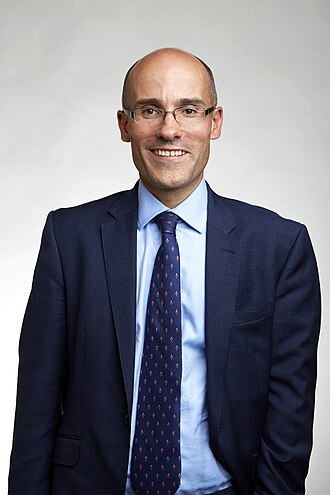
Charles Swanton
Deputy Clinical Director, Francis Crick Institute; Chief Clinician, Cancer Research UK
Tumour evolutionLung cancerCirculating tumour DNA
Leads TRACERx, the study that follows lung cancers as they evolve, and showed how air pollution can trigger lung cancer without new mutations.
Erik Sahai
Principal Group Leader, Tumour Cell Biology Laboratory, Francis Crick Institute
Tumour microenvironmentCancer cell invasionDrug resistance and plasticity
Cell biologist studying how the tumour's surroundings help cancer cells invade and resist drugs.
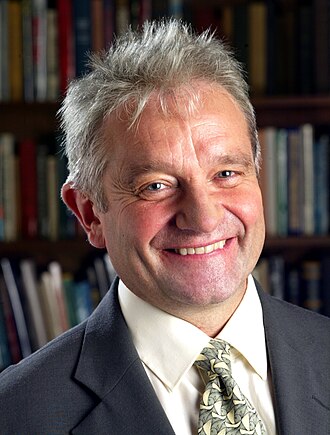
Paul Nurse
Director, Francis Crick Institute; Nobel laureate
Cell cycleCyclin-dependent kinasesInstitute leadership
Nobel laureate who discovered how cyclin-dependent kinases control cell division, and founding director of the Crick.
Tariq Enver
Director, Cancer Research UK City of London Centre
Cancer biotherapeuticsStem cell and leukaemia biologyResearch centre leadership
Scientist who directs the Cancer Research UK City of London Centre, the multi-institution London hub for cancer biotherapeutics research.
translationalNature 2023651 citations
Lung adenocarcinoma promotion by air pollutants
It reframes air quality as cancer policy rather than respiratory policy, and it explains the shape of lung cancer in never-smokers: the mutations are common and mostly silent, and what differs is whether something inflames the tissue enough to let one of them grow.
translationalNature 2023288 citations
TRACERx 421: the full-cohort picture of how lung cancer evolves and which subclones drive relapse
Relapse after surgery is driven by particular subclones that can be identified in the primary tumour and tracked in blood, which argues for evolution-aware adjuvant strategies. The pollution finding reframes carcinogenesis: some agents promote already-mutant cells rather than causing mutations.
translationalNature 20171,507 citations
Phylogenetic ctDNA analysis depicts early-stage lung cancer evolution
The foundation of minimal residual disease testing in lung cancer: a blood test that says a patient will relapse months before a scan does, and says which part of the tumour is doing it. Whether acting on that signal changes outcome is what the ctDNA-guided trials are for.
translationalNew England Journal of Medicine 20171,945 citations
TRACERx first 100: tracking how lung cancers evolve, and how chromosomal chaos predicts relapse
Lung cancers keep evolving after they form, and it is ongoing chromosomal instability rather than the number of mutations that best predicts who will relapse. This gives a rationale for targeting the earliest (clonal) drivers and neoantigens and for tracking evolution in blood after surgery.
translationalNew England Journal of Medicine 20126,127 citations
Gerlinger: a single biopsy misses most of the mutations in a kidney tumour
A single biopsy is an incomplete picture of a patient's cancer. Truncal mutations shared by all cells (in kidney cancer, VHL) are the most reliable drug targets, whereas mutations in only some branches predict resistance. This is why liquid biopsy and multi-region sampling matter.
Similar pages
- Key paperGenomic and evolutionary classification of lung cancer in never smokers
Shares Lung adenocarcinoma promotion by air pollutants, TRACERx first 100: tracking how lung cancers evolve, and how chromosomal chaos predicts relapse, Field cancerisation, Chromosomal instability & aneuploidy.
- IdeaTreat lung cancer in never-smokers as its own disease, with its own detection programme
Shares Evaluate clean-air policies using lung cancer in never-smokers, Lung adenocarcinoma promotion by air pollutants, Whole-exome & whole-genome sequencing, Liquid biopsy (ctDNA).
- IdeaAttack extrachromosomal DNA, the engine of oncogene amplification
Shares DNA replication stress, Chromosomal instability & aneuploidy, Clonal evolution & minimal residual disease, Cancer Research UK.
- TermWhole-genome doubling (WGD)
Shares Is aneuploidy itself a druggable vulnerability?, TRACERx 421: the full-cohort picture of how lung cancer evolves and which subclones drive relapse, TRACERx first 100: tracking how lung cancers evolve, and how chromosomal chaos predicts relapse, Chromosomal instability & aneuploidy.
- Key paperMartincorena: normal sun-exposed skin is a patchwork of cancer-mutation clones
Shares Intercept cancer at the field stage, Field cancerisation, Clonal evolution & minimal residual disease, Whole-exome & whole-genome sequencing.
- TermClonal evolution and the ecological view of cancer
Shares Gerlinger: a single biopsy misses most of the mutations in a kidney tumour, Charles Swanton, Field cancerisation, Clonal evolution & minimal residual disease.
- TermMutational signature
Shares Wellcome, Cancer Grand Challenges, Chromosomal instability & aneuploidy, Clonal evolution & minimal residual disease.
- Key paperGenotypic and histological evolution of lung cancers acquiring resistance to EGFR inhibitors
Shares TRACERx first 100: tracking how lung cancers evolve, and how chromosomal chaos predicts relapse, Clonal evolution & minimal residual disease, Lab models that fail to predict what happens in patients, Tumour heterogeneity and clonal evolution.
cancers
technologies
institutions
Barts Cancer Institute / Barts Health NHS TrustCancer Grand ChallengesCancer Research UKCancer Research UK City of London CentreCancer Research UK Manchester InstituteNorth Central London Cancer AllianceThe Mark Foundation for Cancer ResearchUniversity College London Hospitals / UCL Cancer InstituteWellcome
pathways
trials
ideas
A national rapid research autopsy network for end-stage cancerA public-benefit phase 1 factory that takes academic discoveries into first-in-human trialsAn open-science consortium on the undruggable drivers, open until a candidateBank three spatially separate tumour blocks from every resectionEvaluate clean-air policies using lung cancer in never-smokersIntercept cancer at the field stageIs aneuploidy itself a druggable vulnerability?Pool every multi-sample tumour genome into one open evolution atlas
people
bottlenecks
key papers
Gerlinger: a single biopsy misses most of the mutations in a kidney tumourLung adenocarcinoma promotion by air pollutantsPhylogenetic ctDNA analysis depicts early-stage lung cancer evolutionTRACERx 421: the full-cohort picture of how lung cancer evolves and which subclones drive relapseTRACERx first 100: tracking how lung cancers evolve, and how chromosomal chaos predicts relapse