Loading
institutionsInstitution

Cancer Grand Challenges
A Cancer Research UK and US National Cancer Institute partnership that gives up to £20 million to global teams to tackle a named cancer problem no single lab could solve.
Overview
Launched by Cancer Research UK in 2015 as Grand Challenge and relaunched with the NCI in 2020, Cancer Grand Challenges sets a series of open challenges, from mapping tumours at single-cell resolution to understanding cachexia, extrachromosomal DNA, early-onset colorectal cancer and the causes of cancers in never-smokers, and funds interdisciplinary international teams for five years. Funded teams include Mutographs (mutational signatures of exposures), eDyNAmiC (extrachromosomal DNA), CANCAN (cachexia), PROSPECT and SAMBAI. Patient advocates sit in every team and challenges are set with input from the global community. The programme is a model for goal-directed, cross-border funding.
Location
London, GB
Type
consortium
Website
Newsweek 2026 oncology rank
Not in top 300 listing used
OnCo score
#412 · 12 points (0 Newsweek + 0 NCI + 12 from 6 linked objects) · ranking
- Challenge-setting and team awards (up to £20 million)
- Funded teams: Mutographs, eDyNAmiC, CANCAN, PROSPECT, SAMBAI
- Patient advocacy in every team
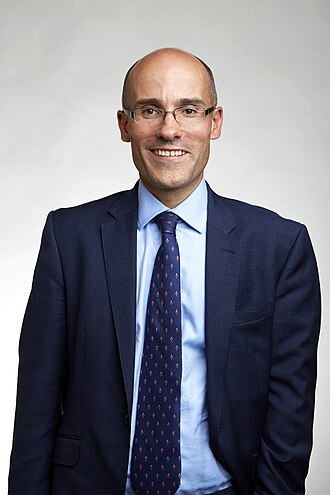
Charles Swanton
Deputy Clinical Director, Francis Crick Institute; Chief Clinician, Cancer Research UK
Tumour evolutionLung cancerCirculating tumour DNA
Leads TRACERx, the study that follows lung cancers as they evolve, and showed how air pollution can trigger lung cancer without new mutations.
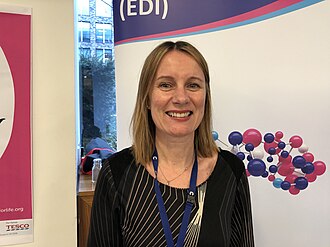
Michelle Mitchell
Chief Executive, Cancer Research UK
Charity leadershipResearch funding strategyCancer policy
Michelle Mitchell is chief executive of the world's largest independent cancer research charity.
Iain Foulkes
Executive Director of Research and Innovation, Cancer Research UK
Research strategyTranslational fundingInnovation partnerships
Iain Foulkes directs the research portfolio of Cancer Research UK.

Douglas R. Lowy
Principal Deputy Director, National Cancer Institute
HPV biologyVaccine developmentCancer prevention
Co-developed the HPV vaccine technology that is eliminating cervical cancer in vaccinated populations.
Similar pages
- IdeaBank three spatially separate tumour blocks from every resection
Shares The Francis Crick Institute, Tumour heterogeneity and clonal evolution, Cancer Research UK, Colorectal cancer.
- InstitutionWellcome
Shares Charles Swanton, The Francis Crick Institute, Mutational signature, Cancer Research UK.
- Key paperTRACERx 421: the full-cohort picture of how lung cancer evolves and which subclones drive relapse
Shares Charles Swanton, The Francis Crick Institute, Tumour heterogeneity and clonal evolution, Cancer Research UK.
- TrialTRACERx
Shares Charles Swanton, The Francis Crick Institute, Non-small-cell lung cancer.
- IdeaPool every multi-sample tumour genome into one open evolution atlas
Shares The Francis Crick Institute, Tumour heterogeneity and clonal evolution, Cancer Research UK.
- IdeaA public-benefit phase 1 factory that takes academic discoveries into first-in-human trials
Shares The Francis Crick Institute, Funding follows fashion, not burden, National Cancer Institute (NIH).
- Key paperGerlinger: a single biopsy misses most of the mutations in a kidney tumour
Shares Charles Swanton, The Francis Crick Institute, Tumour heterogeneity and clonal evolution, Cancer Research UK.
- IdeaA national rapid research autopsy network for end-stage cancer
Shares The Francis Crick Institute, Tumour heterogeneity and clonal evolution, Cancer Research UK.