Loading
institutionsInstitution
International Agency for Research on Cancer (IARC / WHO)
IARC is the WHO's cancer agency, responsible for global cancer statistics (GLOBOCAN), carcinogen classification, and prevention research.
Overview
The International Agency for Research on Cancer in Lyon is the World Health Organization's cancer agency, responsible for the GLOBOCAN global cancer statistics, the IARC Monographs that classify carcinogens, the WHO Classification of Tumours known as the Blue Books, and the cervical cancer elimination effort. Its verdicts that excess body fat causes thirteen cancers and that alcohol caused an estimated 741,000 cancers worldwide in 2020 are carried as papers in OnCo, as are its Indian trials of HPV vaccine dosing and of cervical and oral cancer screening. OnCo connects it to bottlenecks on the absence of cancer and palliative care in most of the world, and to the idea of a Global Fund for cancer. Whether single-dose HPV vaccination becomes the norm is one question its own trials raised. Its GLOBOCAN collection has its own page.
Location
Lyon, FR
Type
government
Website
Newsweek 2026 oncology rank
Not in top 300 listing used
OnCo score
#13 · 122 points (0 Newsweek + 0 NCI + 122 from 61 linked objects) · ranking
- GLOBOCAN
- Monographs
- WHO tumour classification
André Ilbawi
Technical Lead for Cancer Control, World Health Organization
Cancer control policyGlobal healthSurgical oncology
The WHO's lead on cancer control, steering the cervical cancer elimination and global breast and childhood cancer initiatives.
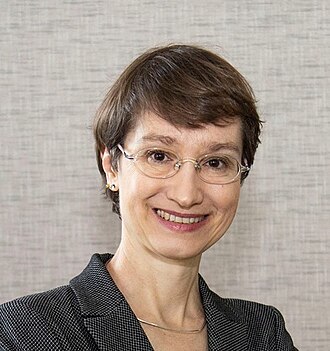
Elisabete Weiderpass
Director, International Agency for Research on Cancer (WHO)
Cancer epidemiologyGlobal cancer burdenPrevention
Leads the WHO's cancer research agency, which classifies carcinogens and publishes the world's cancer statistics.
Freddie Bray
Head, Cancer Surveillance Branch, IARC
Cancer surveillanceGlobal cancer statisticsRegistries
Freddie Bray runs GLOBOCAN, the source of the world's cancer incidence and mortality figures.
Ian Cree
Head, WHO Classification of Tumours programme, IARC
PathologyTumour classificationEvidence-based diagnosis
Ian Cree edits the WHO 'Blue Books', the classification every pathologist uses to name a cancer.
Nubia Muñoz
Emeritus Professor, National Cancer Institute of Colombia; former Chief of Field and Intervention Studies, IARC
HPV epidemiologyCervical cancer causationCancer prevention
Colombian epidemiologist whose IARC studies proved HPV causes cervical cancer and identified the types the vaccines target.
Partha Basu
Head, Early Detection, Prevention and Infections Branch, IARC
Cervical cancer screeningHPVEarly detection in low-resource settings
Leads IARC's early detection and prevention work, central to the WHO cervical cancer elimination strategy.
Rengaswamy Sankaranarayanan
Former Head, Early Detection and Prevention Section and Screening Group, IARC; screening trialist
Cancer screening trialsCervical cancer preventionOral cancer screening
Ran the large Indian trials that showed a single round of HPV testing halves cervical cancer deaths and that visual oral examination cuts deaths in tobacco users, and led the study behind single-dose HPV vaccination.
basicNature 2025150 citations
Geographic and age variations in mutational processes in colorectal cancer
If a childhood exposure to colibactin-producing Escherichia coli writes APC mutations into the colon decades before a tumour appears, then the rise in early-onset bowel cancer may be preventable by something done in childhood rather than by screening alone.
observationalCA: A Cancer Journal for Clinicians 202424,010 citations
Bray 2024: GLOBOCAN 2022, the world's cancer count for 36 cancers in 185 countries
This is the number behind almost every statement about how much cancer there is. It shows the burden shifting towards low- and middle-income countries and towards older populations, which is why prevention, screening and affordable treatment in those settings decide the global trend. OnCo's country and prevalence pages draw on the same GLOBOCAN release.
observationalLancet Oncology 2021490 citations
Alcohol caused an estimated 741,000 cancers worldwide in 2020
There is no safe level of alcohol for cancer risk, and the risk is highest for cancers of the mouth, throat, oesophagus, liver, bowel and breast. Public awareness is low; most people do not know alcohol causes breast cancer. Warning labels and minimum pricing are the policy levers being debated.
observationalInternational Journal of Cancer 20213,421 citations
Ferlay 2021: cancer statistics for the year 2020, an overview
This is the methods and overview companion to the widely cited Sung 2021 report and the reference for how the 2020 figures were built.
observationalCA: A Cancer Journal for Clinicians 202181,698 citations
Sung 2021: GLOBOCAN 2020, the year breast cancer overtook lung cancer as the most diagnosed cancer
This report marked the shift of the global cancer burden towards breast cancer and towards lower-income countries, and it is the baseline most 2020s policy documents cite. The GLOBOCAN 2022 release has since updated the totals.
observationalLancet Oncology 2021changed practice197 citations
Vaccine efficacy against persistent HPV 16/18 infection at 10 years after one, two and three doses of quadrivalent HPV vaccine in girls in India
One dose protects. WHO endorsed one- or two-dose schedules in 2022, halving the cost and the logistics of vaccinating girls, which is decisive for India (about 127,500 cervical cancers a year) and for the global elimination target. It also removed the main barrier to India's national programme with its home-made vaccine.
methodsInternational Journal of Cancer 20195,054 citations
Ferlay 2019: GLOBOCAN 2018 sources and methods
This paper is the place to check how solid a given country's GLOBOCAN 2018 figure is, which matters when the numbers are used to argue for national cancer plans.
observationalCA: A Cancer Journal for Clinicians 201856,796 citations
Bray 2018: GLOBOCAN 2018, worldwide incidence and mortality for 36 cancers
This was the most cited description of the global cancer burden until the 2020 release and is the reference behind many national cancer plans of the late 2010s. Its country-level comparisons showed where prevention, such as HPV and hepatitis B vaccination and tobacco control, would have the largest effect.
7 more, oldest last
IARC verdict: excess body fat causes 13 cancersFerlay 2015: sources, methods and major patterns in GLOBOCAN 2012Torre 2015: Global cancer statistics, 2012Jemal 2011: Global cancer statistics (GLOBOCAN 2008)HPV screening for cervical cancer in rural India (Osmanabad)Effect of screening on oral cancer mortality in Kerala, IndiaParkin 2005: Global cancer statistics, 2002
Similar pages
- TechnologyHPV & HBV vaccination
Shares Nubia Muñoz, André Ilbawi, Partha Basu, Switch every country to single-dose HPV vaccination and add catch-up to age 26.
- TechnologyCancer registries and population surveillance
Shares Ferlay 2015: sources, methods and major patterns in GLOBOCAN 2012, Ferlay 2019: GLOBOCAN 2018 sources and methods, Ferlay 2021: cancer statistics for the year 2020, an overview, Zentrum für Krebsregisterdaten am Robert Koch-Institut.
- TermIncidence versus prevalence
Shares Ferlay 2015: sources, methods and major patterns in GLOBOCAN 2012, Ferlay 2019: GLOBOCAN 2018 sources and methods, Ferlay 2021: cancer statistics for the year 2020, an overview, Jemal 2011: Global cancer statistics (GLOBOCAN 2008).
- TermMortality
Shares Ferlay 2015: sources, methods and major patterns in GLOBOCAN 2012, Ferlay 2019: GLOBOCAN 2018 sources and methods, Ferlay 2021: cancer statistics for the year 2020, an overview, Jemal 2011: Global cancer statistics (GLOBOCAN 2008).
- TechnologyHPV DNA testing and self-sampling
Shares Partha Basu, HPV screening for cervical cancer in rural India (Osmanabad), Rengaswamy Sankaranarayanan, ICMR-National Institute of Cancer Prevention and Research.
- InstitutionTata Memorial Centre
Shares HPV screening for cervical cancer in rural India (Osmanabad), Pivotal trials include sites in Africa, South Asia and Latin America, sponsor-funded, Blended finance and a low-cost linac to close the global radiotherapy gap, A Global Fund for cancer care in low- and middle-income countries.
- IdeaCancer warnings on alcohol labels, evaluated as a natural experiment
Shares Alcohol caused an estimated 741,000 cancers worldwide in 2020, Evaluate alcohol minimum unit pricing against cancer incidence, Alcohol reduction, pricing and cancer warning labels, Diet, exercise and lifestyle roadmap: causes established → interventions that disappointed → exercise proven as treatment.
- TechnologyBrachytherapy
Shares Dharmais National Cancer Center, Institut Salah Azaïez, Radiotherapy for everyone who needs it by 2040, Blended finance and a low-cost linac to close the global radiotherapy gap.
cancers
technologies
drugs
ApprovedProphylactic vaccine (virus-like particles)
CERVAVAC (quadrivalent HPV vaccine, India) · CERVAVAC
institutions
Cancer Institute (WIA), AdyarCancer Institute of Iran, Imam Khomeini Hospital ComplexCentre Léon BérardDharmais National Cancer CenterGates FoundationGeneva University Hospitals (HUG)Hospital de Amor (Barretos Cancer Hospital)ICMR-National Institute of Cancer Prevention and ResearchInstitut National du CancerInstitut Salah AzaïezInstituto Nacional de Câncer (INCA)Instituto Nacional de Cancerología (Colombia)International Atomic Energy Agency: Rays of HopeNational Cancer Center KoreaNational Cancer Center of ChinaNational Cancer Registry Programme (ICMR-NINE, Bengaluru)Union for International Cancer ControlWorld Health Organization Cancer ProgrammeZentrum für Krebsregisterdaten am Robert Koch-Institut
terms
trials
roadmaps
Cancer prevention roadmap: tobacco control and vaccines → biomarker-guided chemoprevention → interception in carriersColorectal cancer roadmap: from the adenoma-carcinoma sequence and the first screening trials to total mesorectal excision, oxaliplatin, RAS testing, immunotherapy for mismatch repair-deficient disease, ctDNA-guided treatment and organ preservationDiet, exercise and lifestyle roadmap: causes established → interventions that disappointed → exercise proven as treatmentGlobal access and affordability roadmap: essential medicines and generics → biosimilars and frugal trials → reliance, pooling and homegrown innovation
ideas
A burden-to-funding audit for gallbladder cancer and a dedicated research callA dedicated global financing window for cancer, modelled on the Global FundA Global Fund for cancer care in low- and middle-income countriesA public map of trial deserts to steer where new sites openA ten-dollar blood test for the five cancers that kill most people in poorer countriesAn international body to rename indolent lesions so 'cancer' means somethingAn open global model of cancer workforce supply and demand by countryAn open-hardware radiotherapy machine built for unreliable power and dustBan commercial sunbedsBlended finance and a low-cost linac to close the global radiotherapy gapBurden-weighted portfolio targets for every major cancer funderEliminate infection-caused cancers: HPV, hepatitis B and C, H. pylori and EBVEvaluate alcohol minimum unit pricing against cancer incidenceFind out what is driving early-onset bowel cancer, starting with colibactin, before extending screening any furtherMake a population cancer registry a condition of every cancer aid programmeOpen-source cancer registry-in-a-box for low-resource settingsPivotal trials include sites in Africa, South Asia and Latin America, sponsor-fundedRadiotherapy for everyone who needs it by 2040Switch every country to single-dose HPV vaccination and add catch-up to age 26
collections
people
bottlenecks
Funding follows fashion, not burdenMisinformation and unproven therapiesMost of the world has almost no cancer careNot enough oncologists, nurses, pathologists, physicistsPain relief and palliative care are unavailable to mostPrevention we already have is not deployedThe hardest cancers are found late
key papers
Alcohol caused an estimated 741,000 cancers worldwide in 2020Bray 2018: GLOBOCAN 2018, worldwide incidence and mortality for 36 cancersBray 2024: GLOBOCAN 2022, the world's cancer count for 36 cancers in 185 countriesEffect of screening on oral cancer mortality in Kerala, IndiaFerlay 2015: sources, methods and major patterns in GLOBOCAN 2012Ferlay 2019: GLOBOCAN 2018 sources and methodsFerlay 2021: cancer statistics for the year 2020, an overviewGeographic and age variations in mutational processes in colorectal cancerHPV screening for cervical cancer in rural India (Osmanabad)IARC verdict: excess body fat causes 13 cancersJemal 2011: Global cancer statistics (GLOBOCAN 2008)Parkin 2005: Global cancer statistics, 2002Sung 2021: GLOBOCAN 2020, the year breast cancer overtook lung cancer as the most diagnosed cancerTorre 2015: Global cancer statistics, 2012Vaccine efficacy against persistent HPV 16/18 infection at 10 years after one, two and three doses of quadrivalent HPV vaccine in girls in India
Open-source projects
All open source in oncology →Open-source projects that this organisation maintains, from OnCo's own catalogue: licence and last activity as the repository reported them on the day of the fetch. Listing is not endorsement; check the licence before reuse and the validation before clinical use.
IARC's multi-sample variant caller for detecting low-frequency mutations across many samples at once.
IARC's open population-based cancer registry software, used by registries in dozens of low- and middle-income countries.
IARC's R package for cancer registry data analysis: age-standardised rates, trends and cohort plots.