Loading
institutionsInstitution

Siteman Cancer Center, Washington University
Sequenced the first cancer genome (2008) and leads in neoantigen vaccine science and CIViC.
Overview
Siteman Cancer Center at Washington University in St Louis, NCI-designated as comprehensive, is where the first cancer genome was sequenced in 2008, when the McDonnell Genome Institute performed whole-genome sequencing of an acute myeloid leukaemia, and it leads in neoantigen vaccine science. It is home to the CIViC clinical variant knowledge base built by Malachi Griffith and Obi L. Griffith, the pVACtools neoantigen prediction software and personalised vaccine trials, with Timothy J. Ley, Li Ding, John F. DiPersio and Ramaswamy Govindan among its people. OnCo links it to whole-genome sequencing, to personalised neoantigen mRNA vaccines, to the antigen presentation pathway, and to St Jude Children's Research Hospital. What makes a neoantigen actually immunogenic is the open question its programme exists to answer. Its genomics, CIViC and vaccine programmes are listed below.
Location
St. Louis, MO, US
Type
cancer center · Washington University in St. Louis
Website
Newsweek 2026 oncology rank
Not in top 300 listing used
NCI designation
comprehensive
OnCo score
#80 · 43 points (0 Newsweek + 15 NCI + 28 from 14 linked objects) · ranking
Research output
From OpenAlex, oncology works in the last five years (2022 to 2026, current year in progress); counted on 2026-09-24.
Matched to Washington University in St. Louis, including child institutions. 1,965 works · 26,194 citations · 66% open access · 11% clinical trials · 1% reviews.
Oncology works per year
4292022
4502023
4092024
3922025
2852026
Most works
- Armin Ghobadi103 works
- John F. DiPersio63 works
- Frederick Lundry Locke49 works
- Nancy L. Bartlett49 works
- Daniel Morgensztern42 works
- Caron Alyce Jacobson36 works
- Premal H. Thaker35 works
- Olalekan O. Oluwole35 works
- Graham A. Colditz34 works
- Ramaswamy Govindan34 works
Most cited
- Cancer genomics
- CIViC
- Neoantigen vaccines
John F. DiPersio
Virginia E. and Sam J. Golman Professor of Medicine; Director, Center for Gene and Cellular Immunotherapy
Stem cell transplantCAR-T for T-cell malignanciesGraft-versus-host disease
Transplant pioneer who developed plerixafor for stem-cell mobilisation and CD7 CAR-T for T-cell leukaemia.
Li Ding
David English Smith Distinguished Professor of Medicine; Director of Computational Biology, Division of Oncology
Cancer genomicsProteogenomicsClonal evolution
Li Ding is the computational leader of TCGA and CPTAC analyses linking genomes to proteins across cancers.
Malachi Griffith
Associate Professor of Medicine and Genetics; Assistant Director, McDonnell Genome Institute
Clinical genomicsCIViC knowledge baseNeoantigen prediction
Co-created CIViC, the open database of what cancer mutations mean, and the pVACtools neoantigen pipeline.
Obi L. Griffith
Associate Professor of Medicine; Assistant Director, McDonnell Genome Institute
Clinical genomicsVariant interpretationOpen-source bioinformatics
Obi Griffith co-leads CIViC and the open tooling that lets clinicians interpret tumour sequencing.
Ramaswamy Govindan
Anheuser-Busch Chair in Medical Oncology; Director, Section of Medical Oncology
Lung cancerGenomics of smokers' lung cancerImmunotherapy
Showed how smoking-related lung cancers carry ten times the mutations of never-smokers' tumours.
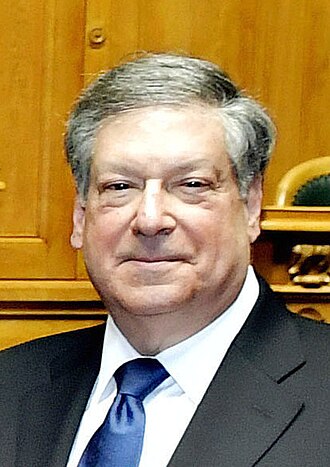
Robert D. Schreiber
Andrew M. and Jane M. Bursky Distinguished Professor; Director, Bursky Center for Human Immunology and Immunotherapy Programs
Cancer immunoeditingNeoantigensInterferon-gamma
Proposed cancer immunoediting and showed neoantigens are the targets of checkpoint immunotherapy.
Timothy J. Eberlein
Director, Siteman Cancer Center; Spencer T. and Ann W. Olin Distinguished Professor
Surgical oncologyBreast cancerTumour immunology
Surgeon who has led Siteman since its founding and built it into a top NCI comprehensive centre.
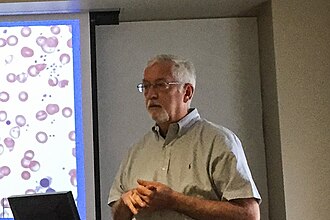
Timothy J. Ley
Lewis T. and Rosalind B. Apple Professor of Oncology
AML genomicsClonal evolutionDNMT3A
Timothy Ley led the first whole-genome sequencing of a cancer, an AML genome, in 2008.
Similar pages
- Key paperIdentification of unique neoantigen qualities in long-term survivors of pancreatic cancer
Shares Neoantigen, Antigen presentation & immune editing, Personalised neoantigen (mRNA) vaccines, Whole-exome & whole-genome sequencing.
- TermImmune surveillance and cancer immunoediting
Shares Robert D. Schreiber, Schreiber, Old and Smyth 2011: cancer immunoediting, Neoantigen, Antigen presentation & immune editing.
- InstitutionUniversity of Florida Health Cancer Center
Shares Proton therapy machines: cyclotrons, synchrotrons and single-room systems, Personalised neoantigen (mRNA) vaccines, Proton therapy, National Cancer Institute (NIH).
- InstitutionUniversity of Wisconsin Carbone Cancer Center
Shares ViewRay (MRIdian), MR-guided adaptive radiotherapy, National Cancer Institute (NIH).
- Key paperGenomic correlates of immune-cell infiltrates in colorectal carcinoma
Shares Neoantigen, Antigen presentation & immune editing, Whole-exome & whole-genome sequencing.
- Key paperThorsson 2018: the immune landscape of cancer across 10,000 tumours
Shares Schreiber, Old and Smyth 2011: cancer immunoediting, Neoantigen.
- InstitutionSylvester Comprehensive Cancer Center, University of Miami
Shares Proton therapy machines: cyclotrons, synchrotrons and single-room systems, Proton therapy, National Cancer Institute (NIH).
- CompanyHitachi (particle therapy)
Shares St. Jude Children's Research Hospital, Proton therapy machines: cyclotrons, synchrotrons and single-room systems, Proton therapy.
technologies
companies
institutions
pathways
terms
ideas
collections
people
key papers
Open-source projects
All open source in oncology →Open-source projects that this organisation maintains, from OnCo's own catalogue: licence and last activity as the repository reported them on the day of the fetch. Listing is not endorsement; check the licence before reuse and the validation before clinical use.
Personalised neoantigen prediction from tumour variants, HLA type and expression, feeding cancer vaccine design; from the Griffith lab.
One of the first somatic variant callers, still used for tumour-normal SNV and indel calling and copy-number from exomes.
The original microsatellite instability caller for paired tumour-normal sequencing from the Ding lab.
Clusters variants by allele frequency to reveal the clonal structure of a tumour, from the McDonnell Genome Institute.
The browser front end of CIViC.
The Griffith lab's open course on cancer genomics analysis from raw reads to interpretation, with all materials online.
The Drug Gene Interaction Database aggregates druggable genes and drug-gene interactions from many sources with an open API.
The Clinical Interpretation of Variants in Cancer: a crowd-curated, public-domain knowledge base of clinically relevant cancer variants, with an open API.