Loading
institutionsInstitution

Fred Hutchinson Cancer Center
Birthplace of bone marrow transplantation (Thomas, Nobel 1990) and a CAR-T pioneer (Riddell).
Overview
Fred Hutchinson Cancer Center in Seattle, NCI-designated as comprehensive and tied to the University of Washington, is the birthplace of bone marrow transplantation, for which Thomas won the Nobel Prize in 1990, and a CAR-T pioneer through Stanley R. Riddell and Philip D. Greenberg, whose work fed the origins of Juno. It runs HPV vaccine trials, the SWOG statistical centre and the Hutch Cancer Immunotherapy Integrated Research Center, with Denise A. Galloway, Joseph M. Unger, Hans-Peter Kiem and Gary H. Lyman also listed. OnCo links it to the cancer cachexia and RNA splicing pathways, to Unger's paper on how few patients are ever offered a trial, and to the Uganda Cancer Institute. Whether splice-derived neoantigens can become off-the-shelf vaccine targets is one open question it is linked to. Its transplant, CAR-T and SWOG programmes are listed below.
Location
Seattle, US
Type
cancer center · University of Washington
Website
Newsweek 2026 oncology rank
Not in top 300 listing used
NCI designation
comprehensive
OnCo score
#65 · 45 points (0 Newsweek + 15 NCI + 30 from 15 linked objects) · ranking
Research output
From OpenAlex, oncology works in the last five years (2022 to 2026, current year in progress); counted on 2026-09-24.
Matched to Fred Hutch Cancer Center, including child institutions. 2,127 works · 30,449 citations · 70% open access · 15% clinical trials · 1% reviews.
Oncology works per year
3662022
4642023
4912024
5082025
2982026
Most works
- Mazyar S. Shadman118 works
- David G. Maloney107 works
- Jordan Gauthier98 works
- Alexandre V. Vinaud Hirayama75 works
- Cameron John Turtle74 works
- Aude G. Chapuis72 works
- Paul Nghiem72 works
- Brian G. Till65 works
- Ryan Daniel Cassaday65 works
- Andrew Jay Portuguese56 works
Most cited
- Transplant
- CAR-T
- SWOG
Denise A. Galloway
Director, Pathogen-Associated Malignancies Integrated Research Center, Fred Hutchinson Cancer Center
HPVViral oncologyCancer prevention
Virologist whose HPV research underpinned the vaccines that are eliminating cervical cancer.
Douglas S. Hawkins
Group Chair, Children's Oncology Group; Professor of Pediatrics, Seattle Children's and University of Washington
Paediatric sarcomaEwing sarcomaCooperative group trials
Paediatric oncologist who chairs the world's largest childhood cancer research organisation.
Gary H. Lyman
Professor, Public Health Sciences and Clinical Research Divisions, Fred Hutchinson Cancer Center
Supportive careHealth economicsComparative effectiveness
Gary Lyman is an oncologist and health economist behind guidelines on growth factors, thrombosis, and biosimilars in cancer care.
Hans-Peter Kiem
Director, Stem Cell and Gene Therapy Program, Fred Hutchinson Cancer Center
Gene therapyStem cell transplantationIn vivo gene editing
Hans-Peter Kiem is a gene and cell therapy researcher working on editing blood stem cells inside the body.
Joseph M. Unger
Associate Professor, Public Health Sciences and SWOG Statistics and Data Management Center, Fred Hutchinson Cancer Center
Trial participation and accessHealth disparitiesBiostatistics
Biostatistician who showed most patients are excluded from trials by structural barriers, not by unwillingness to take part.
Michael LeBlanc
Group Statistician, SWOG Cancer Research Network; Member, Public Health Sciences Division, Fred Hutchinson Cancer Center
BiostatisticsClinical trial design
Michael LeBlanc is the statistician behind SWOG's trials, based at Fred Hutch's statistical centre.
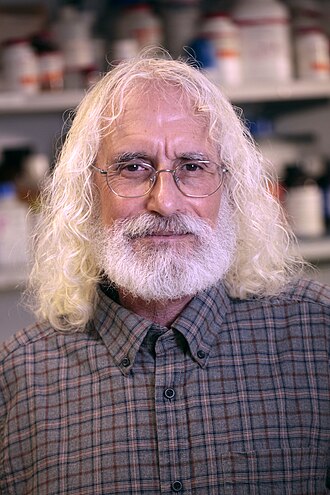
Philip D. Greenberg
Head, Program in Immunology, Fred Hutchinson Cancer Center
T-cell immunotherapyTCR-TLeukaemia
Immunologist who spent four decades engineering T cells to attack leukaemia and solid tumours.
Sara A. Hurvitz
Senior Vice President and Director, Clinical Research Division, Fred Hutchinson Cancer Center; Head, Division of Hematology and Oncology, University of Washington
Breast cancerHER2ADCs
Sara Hurvitz is a breast cancer trialist who led DESTINY-Breast03, the trial where Enhertu beat Kadcyla.
Shailender Bhatia
Medical oncologist, Fred Hutchinson Cancer Center and University of Washington
Merkel cell carcinomaMelanomaImmunotherapy
Seattle oncologist who led STAMP, the trial that showed pembrolizumab after surgery reduces recurrence of Merkel cell carcinoma, a rare and aggressive skin cancer.
Stanley R. Riddell
Professor, Translational Science and Therapeutics Division, Fred Hutchinson Cancer Center
T-cell immunotherapyCAR-TAdoptive cell transfer
Adoptive T-cell therapy pioneer whose defined-composition CAR-T work led to lisocabtagene maraleucel.
Thomas J. Lynch Jr.
President and Director, Fred Hutchinson Cancer Center
Lung cancerTargeted therapyCancer center leadership
Thomas Lynch is a lung cancer oncologist who co-discovered EGFR mutations and now leads Fred Hutch.
meta analysisJNCI: Journal of the National Cancer Institute 2019467 citations
Unger: most patients never get the chance to join a cancer trial, and when offered, half say yes
Patients are not the bottleneck; trial access is. Bringing trials to community practices, loosening restrictive eligibility criteria and reducing site burden would do more for enrolment than patient education. Trials today reflect the minority of patients who happen to be treated where trials exist.
observationalNew England Journal of Medicine 2016changed practice1,312 citations
Inherited DNA-repair gene mutations in men with metastatic prostate cancer
The evidence that made germline testing standard for every man with metastatic prostate cancer, whatever his family history. It changes his treatment, because PARP inhibitors and platinum work better in these tumours, and it changes his relatives' screening, because BRCA2 carries breast, ovarian and pancreatic risk as well.
Similar pages
- InstitutionThe University of Kansas Cancer Center
Shares SWOG Cancer Research Network, Proton therapy machines: cyclotrons, synchrotrons and single-room systems, Proton therapy, National Cancer Institute (NIH).
- InstitutionMayo Clinic Comprehensive Cancer Center in Arizona
Shares Proton therapy machines: cyclotrons, synchrotrons and single-room systems, Proton therapy, National Cancer Institute (NIH), CAR-T cell therapy.
- InstitutionHuntsman Cancer Institute, University of Utah
Shares SWOG Cancer Research Network, Proton therapy machines: cyclotrons, synchrotrons and single-room systems, Proton therapy, National Cancer Institute (NIH).
- JournalJournal of Clinical Investigation
Shares Hans-Peter Kiem, Stanley R. Riddell.
- InstitutionWinship Cancer Institute of Emory University
Shares SWOG Cancer Research Network, Proton therapy machines: cyclotrons, synchrotrons and single-room systems, Proton therapy, National Cancer Institute (NIH).
- IdeaRemote consent and tele-screening so the first trial visit is a video call
Shares Unger: most patients never get the chance to join a cancer trial, and when offered, half say yes, National Cancer Institute (NIH).
- InstitutionSiteman Cancer Center, Washington University
Shares Parker Institute for Cancer Immunotherapy, Proton therapy machines: cyclotrons, synchrotrons and single-room systems, Proton therapy, National Cancer Institute (NIH).
- InstitutionSylvester Comprehensive Cancer Center, University of Miami
Shares Proton therapy machines: cyclotrons, synchrotrons and single-room systems, Proton therapy, National Cancer Institute (NIH).
technologies
companies
institutions
pathways
ideas
people
key papers
Open-source projects
All open source in oncology →Open-source projects that this organisation maintains, from OnCo's own catalogue: licence and last activity as the repository reported them on the day of the fetch. Listing is not endorsement; check the licence before reuse and the validation before clinical use.
Subclonal copy-number and LOH inference for whole-genome and exome tumour data.
Distance-based analysis of T-cell receptor repertoires from the Fred Hutch, for grouping receptors that recognise the same antigens.
Nucleosome profiling of cell-free DNA to infer tumour phenotypes, such as subtype, from plasma sequencing.