Loading
institutionsInstitution
UCSF Helen Diller Family Comprehensive Cancer Center
UCSF is the birthplace of oncogene biology (Bishop, Varmus) and KRAS G12C drugging (Shokat), and a leader in I-SPY adaptive breast trials.
Overview
The UCSF Helen Diller Family Comprehensive Cancer Center in San Francisco is the birthplace of oncogene biology, where Bishop and Varmus made their Nobel-winning discovery, and of KRAS G12C drugging through Shokat's switch-II pocket; it holds NCI comprehensive designation and ranks thirty-third in the Newsweek/Statista oncology list. It leads the I-SPY 2 adaptive platform trial in breast cancer under Laura J. Esserman, runs the UCSF500 panel, and pioneered PSMA PET with Thomas A. Hope, alongside neuro-oncology and prostate programmes. OnCo links it to KRAS and PSMA, to gallium-68 PSMA-11, to the Ostrem and Shokat paper, and to the MYC and telomere pathways. Whether MYC can be drugged directly, and tolerated, is the open question it is linked to. Alan Ashworth, Eric J. Small and Alan P. Venook are among the people listed.
Location
San Francisco, US
Type
cancer center · University of California, San Francisco
Website
Newsweek 2026 oncology rank
#33
NCI designation
comprehensive
OnCo score
#16 · 102 points (27 Newsweek + 15 NCI + 60 from 30 linked objects) · ranking
Research output
From OpenAlex, oncology works in the last five years (2022 to 2026, current year in progress); counted on 2026-09-24.
Matched to University of California, San Francisco, including child institutions. 2,818 works · 47,444 citations · 71% open access · 11% clinical trials · 2% reviews.
Oncology works per year
6652022
6132023
6062024
5572025
3772026
Most works
- Hope S. Rugo109 works
- Laura J. Esserman64 works
- Scarlett Lin Gomez60 works
- Alan P. Venook54 works
- Christine Miaskowski51 works
- Ajay V. Maker44 works
- Adnan A. Alseidi43 works
- Katy K. Tsai42 works
- Marilyn J. Hammer41 works
- Lawrence H. Fong41 works
Most cited
- I-SPY 2 platform trial
- KRAS chemistry
- PSMA PET
- Neuro-oncology
Ajai Chari
Director of the Multiple Myeloma Program, UCSF Helen Diller Family Comprehensive Cancer Center
Multiple myelomaBispecific antibodiesGPRC5D-targeted therapy
Led the pivotal talquetamab trial, establishing GPRC5D as the second bispecific target in myeloma.
Alan Ashworth
President, UCSF Helen Diller Family Comprehensive Cancer Center
DNA repairSynthetic lethalityBRCA
Co-discovered that BRCA-deficient cancers die when PARP is blocked, the idea behind an entire drug class.
Alan P. Venook
Shorenstein Associate Director for Program Development, UCSF Helen Diller Family Comprehensive Cancer Center
Colorectal cancerLiver cancerCooperative group trials
GI oncologist who led CALGB/SWOG 80405 and helped show that tumour side matters in colorectal cancer.
Emily K. Bergsland
Professor of Medicine; Associate Director for Education, UCSF Helen Diller Family Comprehensive Cancer Center
Neuroendocrine tumoursGastrointestinal oncologyClinical trials
Neuroendocrine tumour specialist who helps design the trials that set treatment for these rare cancers.
Eric J. Small
Deputy Director and Chief Scientific Officer, UCSF Helen Diller Family Comprehensive Cancer Center; ASCO President 2025-2026
Prostate cancerGenitourinary oncologyClinical trials
Prostate cancer trialist who helped bring abiraterone and sipuleucel-T to patients, and led ASCO in 2025-26.
Frank McCormick
Professor, UCSF Helen Diller Family Comprehensive Cancer Center; former Scientific Lead, NCI RAS Initiative
RAS biologySignal transductionDrug discovery
RAS biologist who founded Onyx Pharmaceuticals and led the NCI's national effort to drug RAS.
Helen Diller
Namesake of the UCSF Helen Diller Family Comprehensive Cancer Center; the Diller family's UCSF giving reached $650 million by 2017
Cancer centre buildingUniversity philanthropy
The cancer centre at UCSF carries her name, and in 2017 the Helen Diller Foundation gave UCSF $500 million, the largest gift in its history, bringing the family's total there to $650 million.
Jeffrey A. Bluestone
Founding President and Chief Executive Officer, Parker Institute for Cancer Immunotherapy (2016 to 2021); Chief Executive Officer and President, Sonoma BioTherapeutics
T cell immunologyImmune tolerance and regulatory T cellsCheckpoint biology (CTLA-4)
The immunologist who ran the Parker Institute from its launch in 2016, building a shared research network across leading US cancer centres; he came from UCSF and now leads a regulatory T cell company.
Katherine K. Matthay
Professor Emerita of Pediatrics, UCSF; Children's Oncology Group neuroblastoma investigator
Paediatric oncologyNeuroblastomaMIBG therapy
Paediatric oncologist whose trials established transplant and 13-cis-retinoic acid for high-risk neuroblastoma.
Kevan M. Shokat
Professor of Cellular and Molecular Pharmacology, UCSF; Investigator, Howard Hughes Medical Institute
Chemical biologyKRASKinase inhibitors
The chemist whose lab found the hidden pocket in KRAS G12C that made the 'undruggable' target druggable.
Laura J. Esserman
Director, UCSF Carol Franc Buck Breast Care Center; Principal Investigator, I-SPY trials
Breast cancerAdaptive trial designScreening
Breast surgeon who built the I-SPY platform, the adaptive trial that tests new drugs before surgery.
Mitchel S. Berger
Professor of Neurological Surgery and Director, Brain Tumor Center, UCSF
Neurosurgical oncologyExtent of resectionAwake brain mapping
Neurosurgeon who proved that removing more of a glioma extends survival and pioneered awake mapping to do it safely.
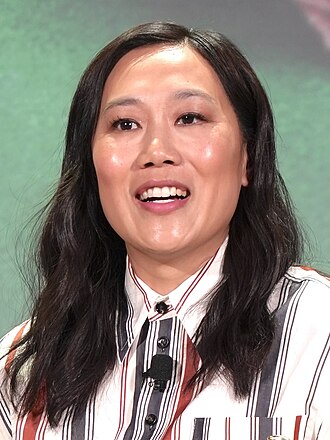
Priscilla Chan
Paediatrician who, with Mark Zuckerberg, founded the Chan Zuckerberg Initiative and the CZ Biohub
Basic biology fundingCell atlasesDisease-agnostic science philanthropy
She and Mark Zuckerberg founded the Chan Zuckerberg Biohub with the stated mission to cure or prevent all disease; its programmes include engineering the immune system to detect cancer and other diseases early.
Rahul Aggarwal
Associate Director for Clinical Sciences, UCSF Helen Diller Family Comprehensive Cancer Center
Prostate cancerNeuroendocrine prostate cancerPSMA theranostics
Prostate oncologist studying how tumours transform to escape hormone therapy and how to target them with radioligands.
Robin Kate Kelley
Gastrointestinal oncologist, UCSF Helen Diller Family Comprehensive Cancer Center
Hepatocellular carcinomaBiliary tract cancerImmunotherapy combinations
San Francisco oncologist who was lead author of KEYNOTE-966, which showed that adding pembrolizumab to gemcitabine and cisplatin helps people with advanced bile duct cancer live longer.
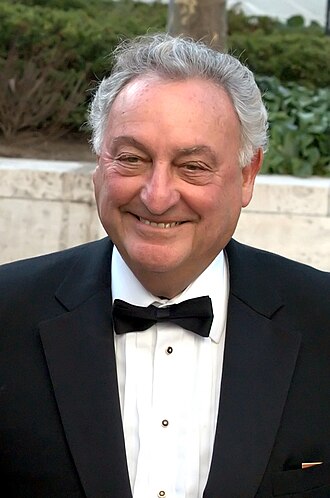
Sanford I. Weill
Banker whose $100 million matching grant launched the Weill Cancer Hub West at UCSF and Stanford
Cancer research partnershipsCell therapyAI in oncology
In May 2025 the Weill Family Foundation's $100 million challenge launched a $200 million, ten-year cancer research partnership between UCSF and Stanford, the two big Bay Area cancer centres that usually compete.
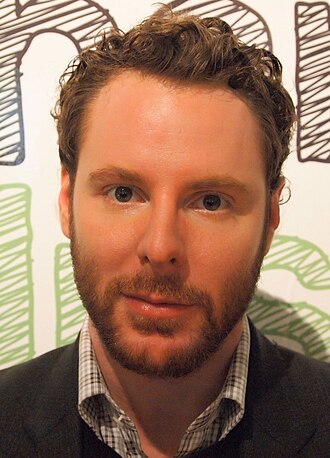
Sean Parker
Founder of the Parker Institute for Cancer Immunotherapy
Cancer immunotherapyResearch networksPhilanthropy
In 2016 he founded and funded an institute that runs cancer immunotherapy research as one network across a dozen leading cancer centres, sharing data, samples and patents rather than competing for them.
Thomas A. Hope
Professor of Radiology; Chief of Nuclear Medicine, UCSF
Nuclear medicinePSMA PETTheranostics
Nuclear medicine physician who led the trials that got PSMA PET approved in the United States.
translationalAnnals of Oncology 2021384 citations
Circulating tumor DNA in neoadjuvant-treated breast cancer reflects response and survival
ctDNA clearance may refine pCR as a surrogate: a patient with residual disease but no ctDNA may not need escalation, the hypothesis behind ctDNA-guided post-neoadjuvant trials.
observationalJAMA Oncology 2021changed practice289 citations
Diagnostic accuracy of 68Ga-PSMA-11 PET for pelvic nodal metastasis detection prior to radical prostatectomy and pelvic lymph node dissection: a multicenter prospective phase 3 imaging trial
This academic programme is what the FDA approved 68Ga-PSMA-11 on in December 2020, and the Illuccix and Locametz kits rest on it for the staging indication. Its message for a man being staged before surgery is that a positive PSMA PET node is very likely real, but a negative scan does not rule out small nodal deposits, so the lymph node dissection still matters.
reviewNature Medicine 20185,034 citations
Binnewies 2018: understanding the tumour immune microenvironment for effective therapy
This framework is behind the everyday language of hot and cold tumours and the design of combination trials that pair checkpoint inhibitors with treatments meant to draw T cells into the tumour.
translationalCancer Discovery 2018435 citations
Genetic mechanisms of immune evasion in colorectal cancer
It gives a genetic account of both immunotherapy failures: why some mismatch repair deficient tumours resist, and why the microsatellite-stable majority has no T cells in it to begin with.
basicNature 20132,090 citations
Ostrem and Shokat: the hidden pocket that made KRAS G12C druggable
The most frequently mutated oncogene in cancer stopped being undruggable, and patients with KRAS G12C lung and bowel cancers now have targeted pills. The approach, exploiting a mutation-created chemical handle and an inactive-state pocket, has become a template for other hard targets.
basicJournal of Experimental Medicine 2012309 citations
MYC pathway activation in triple-negative breast cancer is synthetic lethal with CDK inhibition
MYC amplification, present in a fifth to a third of TNBC, is undruggable directly; this is the synthetic-lethal logic behind CDK (especially CDK9 and CDK1/2) inhibitor trials in the disease.
translationalNature Medicine 20111,587 citations
Subtypes of pancreatic ductal adenocarcinoma and their differing responses to therapy
It opened the subtype programme that Moffitt, Bailey and COMPASS refined; the classical versus mesenchymal or basal split has survived every re-analysis.
Similar pages
- InstitutionStanford Health Care / Stanford Cancer Institute
Shares Emerson Collective, Priscilla Chan, Sanford I. Weill, Damon Runyon Cancer Research Foundation.
- TreatmentIlluccix (kit for Ga-68 gozetotide)
Shares Diagnostic accuracy of 68Ga-PSMA-11 PET for pelvic nodal metastasis detection prior to radical prostatectomy and pelvic lymph node dissection: a multicenter prospective phase 3 imaging trial, Gallium-68 gozetotide (PSMA-11), PSMA-PreRP, PSMA.
- InstitutionUCLA Jonsson Comprehensive Cancer Center
Shares Diagnostic accuracy of 68Ga-PSMA-11 PET for pelvic nodal metastasis detection prior to radical prostatectomy and pelvic lymph node dissection: a multicenter prospective phase 3 imaging trial, Gallium-68 gozetotide (PSMA-11), PSMA-PreRP, Parker Institute for Cancer Immunotherapy.
- TermMaster protocol (platform, basket and umbrella trials)
Shares I-SPY 1 (CALGB 150007/150012, ACRIN 6657), Laura J. Esserman, I-SPY 2.2, I-SPY 2.
- BottleneckFunding follows fashion, not burden
Shares Helen Diller, Emerson Collective, Priscilla Chan, Sanford I. Weill.
- Key paperMost human carcinomas of the exocrine pancreas contain mutant c-K-ras genes
Shares Frank McCormick, Ostrem and Shokat: the hidden pocket that made KRAS G12C druggable, KRAS.
technologies
targets
drugs
ApprovedPET imaging agent
Gallium-68 gozetotide (PSMA-11) · Illuccix / Gozellix / Locametz
companies
institutions
pathways
terms
trials
ideas
people
key papers
Binnewies 2018: understanding the tumour immune microenvironment for effective therapyCirculating tumor DNA in neoadjuvant-treated breast cancer reflects response and survivalDiagnostic accuracy of 68Ga-PSMA-11 PET for pelvic nodal metastasis detection prior to radical prostatectomy and pelvic lymph node dissection: a multicenter prospective phase 3 imaging trialGenetic mechanisms of immune evasion in colorectal cancerMYC pathway activation in triple-negative breast cancer is synthetic lethal with CDK inhibitionOstrem and Shokat: the hidden pocket that made KRAS G12C druggableSubtypes of pancreatic ductal adenocarcinoma and their differing responses to therapy