Loading
journalsJournal
Proceedings of the National Academy of Sciences
PNAS is the US National Academy of Sciences' weekly multidisciplinary journal, free to read six months after publication. Its cancer landmarks include the early oncogene and tumour-suppressor papers, the first PROTAC concept paper and the Iwai and Honjo paper showing that tumours use PD-L1 to escape T cells.
Also called: PNASProc Natl Acad Sci U S A
Overview
The Proceedings of the National Academy of Sciences (PNAS) is the multidisciplinary journal of the US National Academy of Sciences, founded in 1915, appearing weekly and available on a hybrid model with free access after six months. It publishes across all sciences, and its cancer landmarks include early oncogene, tumour-suppressor and cancer-evolution modelling papers, mutational-signature methods, and statistical work on cancer risk and screening. Its readers are scientists of every discipline, which is why foundational cancer biology often appeared here. Within OnCo it is the journal of the first PROTAC concept paper and of the Iwai and Honjo paper showing that tumours use PD-L1 to escape T cells, and a reader would use it for foundational cancer biology and modelling work.
Publisher
National Academy of Sciences · National Academy of Sciences
Scope
general science
Website
Access model
hybrid
Founded
1915
ISSN
0027-8424
Impact factor (2023)
9.4 · Clarivate Journal Citation Reports 2024 (2023 JIF)
observational20191,260 citations
Genomic correlates of clinical outcome in advanced prostate cancer
It is the most disciplined outcome analysis in this disease and its result is deflationary in a useful way: most of the alterations people quote as prognostic do not survive adjustment, and the one that does, RB1, is also the one that marks the route to neuroendocrine transformation.
observational2017157 citations
Altered interactions between unicellular and multicellular genes drive hallmarks of transformation in a diverse range of solid tumors
One term page on OnCo cites this paper by its DOI; this record gives the citation a page of its own so a reader can follow it without leaving OnCo. Read the abstract above alongside the citing page listed under Related; the record was created automatically from the Europe PMC entry and its figures have not been checked by hand.
observational201754 citations
Ancestral gene regulatory networks drive cancer
One term page on OnCo cites this paper by its DOI; this record gives the citation a page of its own so a reader can follow it without leaving OnCo. Read the abstract above alongside the citing page listed under Related; the record was created automatically from the Europe PMC entry and its figures have not been checked by hand.
observational2017450 citations
Combined circulating tumor DNA and protein biomarker-based liquid biopsy for the earlier detection of pancreatic cancers
It quantifies how little DNA an operable pancreatic cancer sheds and why every serious early detection panel pairs DNA with proteins.
observational201593 citations
Toward an evolutionary model of cancer: Considering the mechanisms that govern the fate of somatic mutations
One term page on OnCo cites this paper by its DOI; this record gives the citation a page of its own so a reader can follow it without leaving OnCo. Read the abstract above alongside the citing page listed under Related; the record was created automatically from the Europe PMC entry and its figures have not been checked by hand.
observational2014changed practice256 citations
Population-based screening for breast and ovarian cancer risk due to BRCA1 and BRCA2
This is the evidence base for offering an inherited-risk test to a whole population rather than to people who already look high risk. It is why Israel's health basket funds BRCA founder testing for every woman of Ashkenazi origin without a family history requirement, and it is quoted in every argument for doing the same elsewhere.
observational2013243 citations
Impact of deleterious passenger mutations on cancer progression
One term page on OnCo cites this paper by its DOI; this record gives the citation a page of its own so a reader can follow it without leaving OnCo. Read the abstract above alongside the citing page listed under Related; the record was created automatically from the Europe PMC entry and its figures have not been checked by hand.
basic20131,764 citations
Targeting CXCL12 from FAP-expressing carcinoma-associated fibroblasts synergizes with anti-PD-L1 immunotherapy in pancreatic cancer
The mechanistic account of T-cell exclusion that all later combination immunotherapy trials in pancreatic cancer cite, and the origin of CXCR4 inhibitor combinations.
observational2012725 citations
Causes, consequences, and remedies for growth-induced solid stress in murine and human tumors
One technology page on OnCo cites this paper by its DOI; this record gives the citation a page of its own so a reader can follow it without leaving OnCo. Read the abstract above alongside the citing page listed under Related; the record was created automatically from the Europe PMC entry and its figures have not been checked by hand.
translational2011474 citations
Whole-exome sequencing of neoplastic cysts of the pancreas reveals recurrent mutations in components of ubiquitin-dependent pathways
It put RNF43 on the pancreatic driver list and gave cyst fluid testing a way to separate the harmless serous cyst from the mucinous ones that need watching.
basic2009changed practice604 citations
Recurrent fusion of MYB and NFIB transcription factor genes in adenoid cystic carcinoma
MYB immunostaining and MYB-NFIB fusion testing are now diagnostic tools for adenoid cystic carcinoma, and MYB is the principal target of therapeutic research in the disease.
basic20037,561 citations
Al-Hajj 2003: prospective identification of tumorigenic breast cancer cells
This paper extended the cancer stem cell concept from leukaemia to a common solid tumour and started the search for tumour-initiating cells across cancers. It underpins research on why cancers relapse after treatments that shrink them and on therapies aimed at the cells that regrow disease.
translational2003changed practice3,687 citations
Repeated observation of breast tumor subtypes in independent gene expression data sets
The molecular bridge between germline BRCA1 and triple-negative breast cancer; it is why every triple-negative patient under 60 is now offered germline testing and why PARP inhibitors were tried in this disease first.
basic20022,519 citations
Iwai and Honjo: tumours use PD-L1 to escape T cells, and blocking it restores attack
Tumours hide from T cells by displaying PD-L1; blocking that interaction lets the immune system attack. This is the mechanism of pembrolizumab, nivolumab, atezolizumab and their relatives, which now treat more than 20 cancer types.
translational2001changed practice7,914 citations
Gene expression patterns of breast carcinomas distinguish tumor subclasses with clinical implications
The first evidence that the basal-like group is not just biologically distinct but clinically dangerous, the observation that triple-negative outcome studies of 2007 confirmed in the clinic.
basic20012,057 citations
The first PROTAC: a chimeric molecule that tags a protein for destruction
Instead of blocking a cancer protein, a drug can now remove it entirely, which works even for proteins without a druggable active site and can overcome resistance driven by target overexpression or mutation. Several degraders are in late-stage trials for breast and prostate cancer.
basic1998257 citations
Genetic instability of cancer cells is proportional to their degree of aneuploidy
One term page on OnCo cites this paper by its DOI; this record gives the citation a page of its own so a reader can follow it without leaving OnCo. Read the abstract above alongside the citing page listed under Related; the record was created automatically from the Europe PMC entry and its figures have not been checked by hand.
basic19981,338 citations
Incidence and functional consequences of hMLH1 promoter hypermethylation in colorectal carcinoma
It established the epigenetic route to mismatch repair deficiency, which is why an MLH1-deficient tumour is tested for MLH1 methylation or BRAF V600E before a family is told it may have Lynch syndrome.
basic1989changed practice1,191 citations
Expression of immunoglobulin-T-cell receptor chimeric molecules as functional receptors with antibody-type specificity
Every approved CAR-T product descends from this design. It is the reason a T cell can be pointed at CD19 or BCMA at all, and the reason the question of what to point it at in solid tumours is a question about antigens rather than about the receptor.
basic1981changed practice
Adult T-cell leukemia: antigen in an ATL cell line and detection of antibodies to the antigen in human sera
The seroepidemiology that tied a virus to a cancer across a population rather than in one patient. It is the reason blood donations are screened for human T-lymphotropic virus type 1 in Japan and elsewhere, and the reason breastfeeding advice is part of cancer prevention in endemic regions.
basic1980changed practice
Detection and isolation of type C retrovirus particles from fresh and cultured lymphocytes of a patient with cutaneous T-cell lymphoma
The first human retrovirus, and the start of the line of work that identified HIV three years later. For lymphoma it means that adult T-cell leukaemia/lymphoma has a known, transmissible, preventable cause, and that screening blood donors and advising on breastfeeding in endemic areas are cancer prevention measures.
basic1975684 citations
Normal genetically mosaic mice produced from malignant teratocarcinoma cells
One term page on OnCo cites this paper by its DOI; this record gives the citation a page of its own so a reader can follow it without leaving OnCo. Read the abstract above alongside the citing page listed under Related; the record was created automatically from the Europe PMC entry and its figures have not been checked by hand.
observational19714,334 citations
Mutation and cancer: statistical study of retinoblastoma
One term page on OnCo cites this paper by its DOI; this record gives the citation a page of its own so a reader can follow it without leaving OnCo. Read the abstract above alongside the citing page listed under Related; the record was created automatically from the Europe PMC entry and its figures have not been checked by hand.
Brandon Wainwright
Director and CEO of QIMR Berghofer Medical Research Institute
Cancer geneticsMedulloblastomaHedgehog signalling
Geneticist known for work on the genetic drivers of childhood brain cancer who became Director and CEO of QIMR Berghofer, a leading Australian medical research institute, in 2026.
Chong-Jen Yu
Superintendent
PulmonologyCritical care medicineHospital leadership
Pulmonologist appointed Superintendent of National Taiwan University Hospital in August 2025, leading Taiwan's flagship academic medical centre.
Dario C. Altieri
President and Chief Executive Officer, The Wistar Institute; Director, Ellen and Ronald Caplan Cancer Center
Cancer biologyMitochondrial signallingSurvivin and cell death
Cancer biologist who has been President and CEO of The Wistar Institute in Philadelphia since 2015 and directs its NCI-designated Ellen and Ronald Caplan Cancer Center.

Douglas R. Lowy
Principal Deputy Director, National Cancer Institute
HPV biologyVaccine developmentCancer prevention
Co-developed the HPV vaccine technology that is eliminating cervical cancer in vaccinated populations.
Drew M. Pardoll
Director, Bloomberg~Kimmel Institute for Cancer Immunotherapy
Tumour immunologyPD-1 pathwayCancer vaccines
Immunologist who helped define the PD-1 pathway's role in cancer and built one of the largest immunotherapy institutes.
Ephrat Levy-Lahad
Director, Medical Genetics Institute, Shaare Zedek Medical Center; professor, Hebrew University-Hadassah Medical School
Cancer geneticsBRCA1 and BRCA2Population genetic screening
Produced the evidence that made Israel the first country to offer BRCA testing to a whole population group, by measuring cancer risk in carriers found through healthy men rather than through cancer clinics.
Fernando Peláez
Acting Scientific Director
Drug discoveryMicrobiologyResearch management
Biologist and long-time CNIO director of biotechnology programmes who became Acting Scientific Director of Spain's national cancer research centre in 2025.
Hitoshi Nakagama
President, National Cancer Center Japan
Cancer research leadershipCancer preventionMolecular carcinogenesis
Leads Japan's national cancer centre, the hub of the country's genomic medicine and early-phase trial programmes.
Irving L. Weissman
Virginia and D.K. Ludwig Professor; Founding Director, Stanford Institute for Stem Cell Biology and Regenerative Medicine
Stem cell biologyCancer stem cellsInnate immune checkpoints
Isolated the first blood stem cells and discovered the 'don't eat me' signal CD47 on cancer cells.

James P. Allison
Chair, Department of Immunology; Director, James P. Allison Institute, MD Anderson
Tumour immunologyImmune checkpoint blockadeT-cell biology
Discovered that blocking CTLA-4 unleashes T cells against cancer, the work behind ipilimumab and the 2018 Nobel Prize.
Joann B. Sweasy
Director, Fred & Pamela Buffett Cancer Center, University of Nebraska Medical Center
DNA repairCancer biologyCancer centre management
DNA repair scientist who directs the Fred & Pamela Buffett Cancer Center in Omaha and the UNMC Eppley Institute.
John Stagg
Director of the Rosalind and Morris Goodman Cancer Institute
Cancer immunotherapyImmuno-oncologyTherapeutic target discovery
Immunologist who studies why tumours resist immunotherapy and directs the Goodman Cancer Institute, McGill University's cancer research institute in Montreal.
Lieping Chen
United Technologies Corporation Professor in Cancer Research, Yale School of Medicine
PD-L1 biologyTumour immune evasionCheckpoint discovery
Discovered PD-L1 (B7-H1) and showed tumours use it to escape immunity, the biology behind every anti-PD-1 drug.
Maneesha S Inamdar
Director, Institute for Stem Cell Science and Regenerative Medicine (BRIC-inStem)
Stem cell scienceRegenerative medicineResearch institute leadership
Stem cell biologist who directs BRIC-inStem in Bengaluru, India's national institute for stem cell science and regenerative medicine.
Max S. Wicha
Madeline and Sidney Forbes Professor of Oncology; Founding Director, Rogel Cancer Center
Cancer stem cellsBreast cancerStem cell targeting
Max Wicha identified breast cancer stem cells and made them a therapeutic target.
Moshe Oren
Professor, Department of Molecular Cell Biology, Weizmann Institute of Science
p53 biologyMutant p53 gain of functionTumour suppression
Cloned p53 and then spent a career on what it does. The field's first reading of his own 1984 result, that p53 was an oncogene, turned out to be wrong, and the correction is the better story.
Rohit Bhargava
Phillip and Ann Sharp Director, Cancer Center at Illinois
BioengineeringChemical imagingCancer technology research
Engineer who founded and directs the Cancer Center at Illinois, the University of Illinois Urbana-Champaign centre that applies engineering and basic science to cancer.
Saijuan Chen
Professor; Shanghai Institute of Hematology, Ruijin Hospital, Shanghai Jiao Tong University School of Medicine
Acute promyelocytic leukaemiaLeukaemia genomicsDifferentiation therapy
Saijuan Chen helped turn acute promyelocytic leukaemia from a leukaemia that often killed within weeks into one of the most curable, by showing how retinoic acid and arsenic act and combining them.
Samantha Oakes
CEO
Cancer research managementBreast and prostate cancer biologyClinical trials operations
Cancer biologist turned research executive who serves as CEO of the ANZUP Cancer Trials Group.
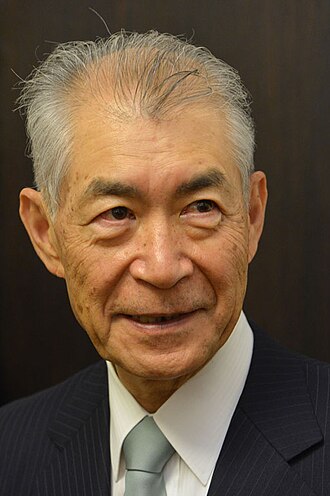
Tasuku Honjo
Immunologist who discovered PD-1 and opened the way to anti-PD-1 therapy
ImmunologyPD-1Checkpoint immunotherapy
He discovered the PD-1 molecule on T cells in 1992 and showed it acts as a brake on immune attack. Blocking it produced nivolumab and pembrolizumab, now used across dozens of cancers; Nobel Prize 2018.
Yosef Yarden
Professor, Department of Immunology and Regenerative Biology, Weizmann Institute of Science
ErbB/HER receptor signallingEGFR biologyAntibody combinations
One of the people who worked out what the HER family of receptors does and how antibodies against them behave, including why combining two antibodies against the same receptor works better than either alone.
Zelig Eshhar
Immunologist; professor emeritus, Weizmann Institute of Science, latterly Immunology Laboratory, Tel Aviv Sourasky Medical Center
Cancer immunologyChimeric antigen receptorsAdoptive cell therapy
The immunologist who, in 1989, first gave a T cell an antibody's aim. Every CAR-T product on the market descends from that experiment.
Zhu Chen
Professor, Shanghai Institute of Hematology, Ruijin Hospital; former Minister of Health of China (2007 to 2013)
Acute promyelocytic leukaemiaMolecular haematologyHealth policy
Zhu Chen, a leukaemia scientist who became China's health minister, co-developed the retinoic acid plus arsenic treatment that cures most acute promyelocytic leukaemia and then reformed the health system that pays for it.
observationalProceedings of the National Academy of Sciences 20191,260 citations
Genomic correlates of clinical outcome in advanced prostate cancer
It is the most disciplined outcome analysis in this disease and its result is deflationary in a useful way: most of the alterations people quote as prognostic do not survive adjustment, and the one that does, RB1, is also the one that marks the route to neuroendocrine transformation.
observationalProceedings of the National Academy of Sciences 2017157 citations
Altered interactions between unicellular and multicellular genes drive hallmarks of transformation in a diverse range of solid tumors
One term page on OnCo cites this paper by its DOI; this record gives the citation a page of its own so a reader can follow it without leaving OnCo. Read the abstract above alongside the citing page listed under Related; the record was created automatically from the Europe PMC entry and its figures have not been checked by hand.
observationalProceedings of the National Academy of Sciences 201754 citations
Ancestral gene regulatory networks drive cancer
One term page on OnCo cites this paper by its DOI; this record gives the citation a page of its own so a reader can follow it without leaving OnCo. Read the abstract above alongside the citing page listed under Related; the record was created automatically from the Europe PMC entry and its figures have not been checked by hand.
observationalPNAS 2017450 citations
Combined circulating tumor DNA and protein biomarker-based liquid biopsy for the earlier detection of pancreatic cancers
It quantifies how little DNA an operable pancreatic cancer sheds and why every serious early detection panel pairs DNA with proteins.
observationalProceedings of the National Academy of Sciences 201593 citations
Toward an evolutionary model of cancer: Considering the mechanisms that govern the fate of somatic mutations
One term page on OnCo cites this paper by its DOI; this record gives the citation a page of its own so a reader can follow it without leaving OnCo. Read the abstract above alongside the citing page listed under Related; the record was created automatically from the Europe PMC entry and its figures have not been checked by hand.
observationalProceedings of the National Academy of Sciences 2014changed practice256 citations
Population-based screening for breast and ovarian cancer risk due to BRCA1 and BRCA2
This is the evidence base for offering an inherited-risk test to a whole population rather than to people who already look high risk. It is why Israel's health basket funds BRCA founder testing for every woman of Ashkenazi origin without a family history requirement, and it is quoted in every argument for doing the same elsewhere.
observationalProceedings of the National Academy of Sciences 2013243 citations
Impact of deleterious passenger mutations on cancer progression
One term page on OnCo cites this paper by its DOI; this record gives the citation a page of its own so a reader can follow it without leaving OnCo. Read the abstract above alongside the citing page listed under Related; the record was created automatically from the Europe PMC entry and its figures have not been checked by hand.
basicPNAS 20131,764 citations
Targeting CXCL12 from FAP-expressing carcinoma-associated fibroblasts synergizes with anti-PD-L1 immunotherapy in pancreatic cancer
The mechanistic account of T-cell exclusion that all later combination immunotherapy trials in pancreatic cancer cite, and the origin of CXCR4 inhibitor combinations.
14 more, oldest last
Causes, consequences, and remedies for growth-induced solid stress in murine and human tumorsWhole-exome sequencing of neoplastic cysts of the pancreas reveals recurrent mutations in components of ubiquitin-dependent pathwaysRecurrent fusion of MYB and NFIB transcription factor genes in adenoid cystic carcinomaRepeated observation of breast tumor subtypes in independent gene expression data setsIwai and Honjo: tumours use PD-L1 to escape T cells, and blocking it restores attackGene expression patterns of breast carcinomas distinguish tumor subclasses with clinical implicationsThe first PROTAC: a chimeric molecule that tags a protein for destructionGenetic instability of cancer cells is proportional to their degree of aneuploidyIncidence and functional consequences of hMLH1 promoter hypermethylation in colorectal carcinomaExpression of immunoglobulin-T-cell receptor chimeric molecules as functional receptors with antibody-type specificityAdult T-cell leukemia: antigen in an ATL cell line and detection of antibodies to the antigen in human seraDetection and isolation of type C retrovirus particles from fresh and cultured lymphocytes of a patient with cutaneous T-cell lymphomaNormal genetically mosaic mice produced from malignant teratocarcinoma cellsMutation and cancer: statistical study of retinoblastoma
Similar pages
- TermAtavistic theory: cancer as a reversion to an ancient programme
Shares Altered interactions between unicellular and multicellular genes drive hallmarks of transformation in a diverse range of solid tumors, Ancestral gene regulatory networks drive cancer.
- TermSomatic mutation theory of cancer
Shares Mutation and cancer: statistical study of retinoblastoma, Normal genetically mosaic mice produced from malignant teratocarcinoma cells, Tumour suppressor gene.
- Key paperMolecular portraits of human breast tumours
Shares Gene expression patterns of breast carcinomas distinguish tumor subclasses with clinical implications, Repeated observation of breast tumor subtypes in independent gene expression data sets.
- PersonCharles M. Perou
Shares Gene expression patterns of breast carcinomas distinguish tumor subclasses with clinical implications, Repeated observation of breast tumor subtypes in independent gene expression data sets.
- Key paperVCAP-AMP-VECP compared with biweekly CHOP for adult T-cell leukemia-lymphoma: Japan Clinical Oncology Group Study JCOG9801
Shares Adult T-cell leukemia: antigen in an ATL cell line and detection of antibodies to the antigen in human sera, Detection and isolation of type C retrovirus particles from fresh and cultured lymphocytes of a patient with cutaneous T-cell lymphoma.
- PersonBert Vogelstein
Shares Whole-exome sequencing of neoplastic cysts of the pancreas reveals recurrent mutations in components of ubiquitin-dependent pathways, Combined circulating tumor DNA and protein biomarker-based liquid biopsy for the earlier detection of pancreatic cancers, Incidence and functional consequences of hMLH1 promoter hypermethylation in colorectal carcinoma.
- TrialJCOG9801
Shares Adult T-cell leukemia: antigen in an ATL cell line and detection of antibodies to the antigen in human sera, Detection and isolation of type C retrovirus particles from fresh and cultured lymphocytes of a patient with cutaneous T-cell lymphoma.
terms
people
key papers
Adult T-cell leukemia: antigen in an ATL cell line and detection of antibodies to the antigen in human seraAltered interactions between unicellular and multicellular genes drive hallmarks of transformation in a diverse range of solid tumorsAncestral gene regulatory networks drive cancerCauses, consequences, and remedies for growth-induced solid stress in murine and human tumorsCombined circulating tumor DNA and protein biomarker-based liquid biopsy for the earlier detection of pancreatic cancersDetection and isolation of type C retrovirus particles from fresh and cultured lymphocytes of a patient with cutaneous T-cell lymphomaExpression of immunoglobulin-T-cell receptor chimeric molecules as functional receptors with antibody-type specificityGene expression patterns of breast carcinomas distinguish tumor subclasses with clinical implicationsGenetic instability of cancer cells is proportional to their degree of aneuploidyGenomic correlates of clinical outcome in advanced prostate cancerImpact of deleterious passenger mutations on cancer progressionIncidence and functional consequences of hMLH1 promoter hypermethylation in colorectal carcinomaIwai and Honjo: tumours use PD-L1 to escape T cells, and blocking it restores attackMutation and cancer: statistical study of retinoblastomaNormal genetically mosaic mice produced from malignant teratocarcinoma cellsPopulation-based screening for breast and ovarian cancer risk due to BRCA1 and BRCA2Recurrent fusion of MYB and NFIB transcription factor genes in adenoid cystic carcinomaRepeated observation of breast tumor subtypes in independent gene expression data setsTargeting CXCL12 from FAP-expressing carcinoma-associated fibroblasts synergizes with anti-PD-L1 immunotherapy in pancreatic cancerThe first PROTAC: a chimeric molecule that tags a protein for destructionToward an evolutionary model of cancer: Considering the mechanisms that govern the fate of somatic mutationsWhole-exome sequencing of neoplastic cysts of the pancreas reveals recurrent mutations in components of ubiquitin-dependent pathways