Loading
institutionsInstitution
David H. Koch Institute for Integrative Cancer Research at MIT
MIT's cancer research institute, where the first human oncogene and RB were found and where biology meets engineering; Moderna's academic root.
Also called: Koch InstituteMIT Center for Cancer Research
Overview
Founded in 1974 by Salvador Luria as the MIT Center for Cancer Research and reborn as the Koch Institute in 2007, this NCI basic laboratory centre pairs cancer biologists with engineers. Robert Weinberg identified the first human oncogene (RAS) and the first tumour suppressor gene (RB) and co-wrote 'The Hallmarks of Cancer'; Phillip Sharp discovered RNA splicing (Nobel Prize 1993); Tyler Jacks built the genetically engineered mouse models of KRAS/p53 lung cancer used worldwide. Robert Langer's drug-delivery laboratory co-founded Moderna and dozens of companies, Sangeeta Bhatia develops synthetic biomarkers and nanotechnology for early detection, and Darrell Irvine designs nanoparticle vaccines and cytokine engineering. The institute's Bridge Project funds joint work with the Dana-Farber/Harvard Cancer Center.
Location
Cambridge, MA, US
Type
research institute · Massachusetts Institute of Technology
Website
Newsweek 2026 oncology rank
Not in top 300 listing used
NCI designation
basic
OnCo score
#94 · 40 points (0 Newsweek + 8 NCI + 32 from 16 linked objects) · ranking
Research output
From OpenAlex, oncology works in the last five years (2022 to 2026, current year in progress); counted on 2026-09-16.
Matched to Koch Institute for Integrative Cancer Research At MIT, including child institutions. 22 works · 500 citations · 77% open access · 0% clinical trials · 0% reviews.
Oncology works per year
52022
62023
62024
52025
02026
Most works
- Stefani Spranger7 works
- Duncan M. Morgan7 works
- J. Christopher Love5 works
- K. Dane Wittrup5 works
- Wuhbet Abraham4 works
- Leyuan Ma4 works
- Tyler Jacks4 works
- Parisa Yousefpour4 works
- Darrell J. Irvine4 works
- Emi A. Lutz3 works
Most cited
- Cancer biology (oncogenes, mouse models)
- Drug delivery and nanomedicine
- Engineered immunotherapy
- Bridge Project with DF/HCC
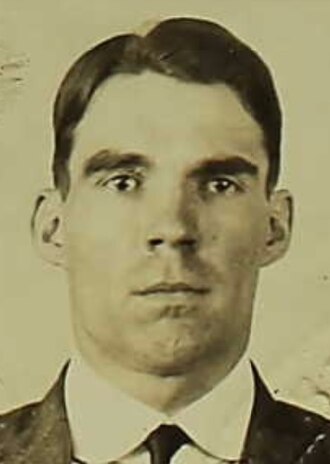
Daniel K. Ludwig
Shipping magnate who endowed the Ludwig Institute for Cancer Research in 1971
Cancer research endowmentInstitute buildingCancer immunology
In 1971 he put nearly all of his international holdings into a cancer research institute that carries his name reluctantly; it has since spent more than $1.8 billion of its own money on cancer science.
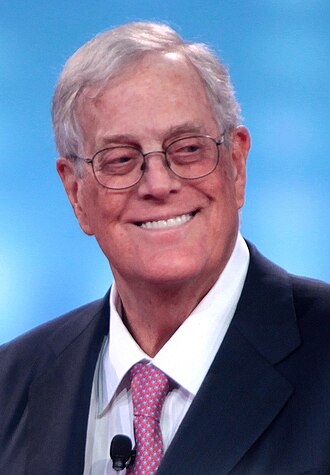
David H. Koch
Prostate cancer patient whose gifts built the MIT Koch Institute and the MSK Koch Center for Cancer Care
Cancer research buildingsEngineering and cancer biologyProstate cancer
Treated for prostate cancer from 1992, he gave MIT $100 million in 2007 to build an institute that puts engineers and cancer biologists under one roof, and MSK $150 million in 2015 for a new outpatient cancer building.
Matthew Vander Heiden
Director
Cancer metabolismMedical oncologyCell biology
Physician-scientist and cancer metabolism expert who directs MIT's Koch Institute for Integrative Cancer Research.
Regina Barzilay
School of Engineering Distinguished Professor for AI and Health, MIT; AI Faculty Lead, Jameel Clinic
Machine learning for oncologyAI risk prediction from imagingDrug discovery AI
Computer scientist who built Mirai and Sybil, AI models that predict breast and lung cancer risk years before diagnosis.
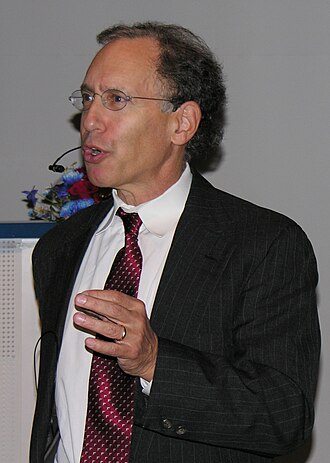
Robert S. Langer
David H. Koch (1962) Institute Professor
Drug deliveryBiomaterialsNanomedicine
Biomedical engineer whose Koch Institute lab pioneered controlled drug delivery and nanomedicine, including approaches to cancer therapy.
Similar pages
- IdeaPick the laboratory model that matches the patient, not the one to hand
Shares Broad Institute of MIT and Harvard, Patient-derived xenografts, Lab models that fail to predict what happens in patients, National Cancer Institute (NIH).
- PersonSteven A. Rosenberg
Shares Cytokines & engineered cytokines, TP53, National Cancer Institute (NIH), KRAS.
- PersonCatherine J. Wu
Shares Broad Institute of MIT and Harvard, Personalised neoantigen (mRNA) vaccines, Dana-Farber Brigham Cancer Center.
- IdeaScore every model system on how well it predicted real trial results
Shares Broad Institute of MIT and Harvard, Patient-derived xenografts, Lab models that fail to predict what happens in patients.
- InstitutionCentro Nacional de Investigaciones Oncológicas (CNIO)
Shares Oncogene addiction, Patient-derived xenografts, TP53, KRAS.
- Key paperIntegrated genomic characterization of pancreatic ductal adenocarcinoma
Shares Broad Institute of MIT and Harvard, Dana-Farber Brigham Cancer Center, TP53, National Cancer Institute (NIH).
- IdeaMulti-centre randomised animal trials before committing to a human trial
Shares Patient-derived xenografts, Lab models that fail to predict what happens in patients, National Cancer Institute (NIH).
- IdeaAn open organoid bank for cancers too rare to have models
Shares Patient-derived xenografts, Lab models that fail to predict what happens in patients, National Cancer Institute (NIH).