Loading
institutionsInstitution

Howard Hughes Medical Institute
The Howard Hughes Medical Institute funds scientists rather than projects through its Investigator Program; its roster has included Bert Vogelstein, William Kaelin, Charles Sawyers, Benjamin Ebert and Feng Zhang, the researchers behind colorectal cancer genetics, hypoxia sensing, kinase inhibitor resistance and CRISPR tools.
Also called: HHMI
Overview
Founded in 1953 by Howard Hughes, HHMI is one of the largest private funders of biomedical research in the United States. Its Investigator Program gives long-term, flexible support to scientists at their home institutions, and its roster has included cancer researchers such as Bert Vogelstein (colorectal cancer genetics), William Kaelin (VHL and hypoxia sensing, Nobel 2019), Charles Sawyers (androgen receptor and kinase inhibitor resistance), Benjamin Ebert (lenalidomide's mechanism, clonal haematopoiesis) and Feng Zhang (CRISPR tools). HHMI also runs the Janelia Research Campus, the Hanna Gray and Freeman Hrabowski early-career fellowships, and it co-founded the open-access journal eLife.
Location
Chevy Chase, MD, US
Type
consortium
Website
Newsweek 2026 oncology rank
Not in top 300 listing used
OnCo score
#463 · 8 points (0 Newsweek + 0 NCI + 8 from 4 linked objects) · ranking
Research output
From OpenAlex, oncology works in the last five years (2022 to 2026, current year in progress); counted on 2026-10-01.
Matched to Howard Hughes Medical Institute, including child institutions. 375 works · 12,002 citations · 92% open access · 2% clinical trials · 2% reviews.
Oncology works per year
932022
702023
742024
862025
522026
Most works
- Scott W. Lowe25 works
- K. Christopher García24 works
- Arul M. Chinnaiyan19 works
- Reuben S. Harris16 works
- Yu-Jui Ho15 works
- Dana Pe’er15 works
- Michelle Monje12 works
- Daniel A. Haber12 works
- Darrell J. Irvine12 works
- Shyamala Maheswaran11 works
Most cited
- HHMI Investigator Program
- Janelia Research Campus
- Hanna Gray and Freeman Hrabowski fellowships
- Open science (eLife, preprints)
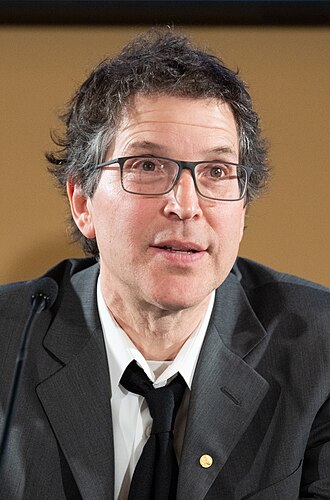
David Baker
Founder and Director of the Institute for Protein Design
Computational protein designStructural biologyBiochemistry
Nobel laureate biochemist who founded and directs the Institute for Protein Design, which builds new proteins for medicine including cancer therapeutics.
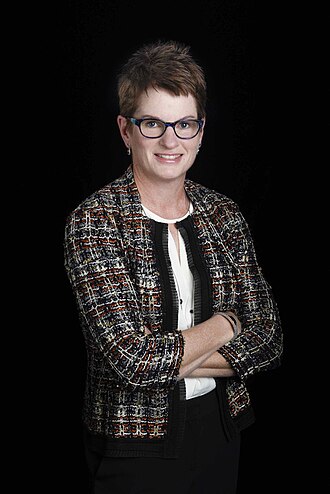
Erin K. O'Shea
President
Systems biologyGene regulationResearch funding leadership
Systems biologist who has led the Howard Hughes Medical Institute, a major funder of US biomedical and cancer research, since 2016.
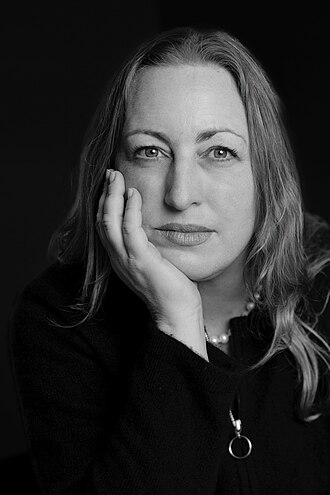
Michelle Monje
Professor of Neurology and Neurological Sciences, Stanford University; HHMI Investigator
Paediatric high-grade gliomaCancer neuroscienceGD2 CAR T cells
Founded cancer neuroscience and led the GD2 CAR-T trial that produced the first regressions of diffuse midline glioma.
Reuben Shaw
Director of the Salk Cancer Center, Salk Institute for Biological Studies
Cancer metabolismAMPK and LKB1 signallingMolecular and cell biology
Cancer biologist who directs the NCI-designated Salk Cancer Center in La Jolla and holds the William R. Brody Chair at the Salk Institute.
Silvana Konermann
Executive Director and Core Investigator, Arc Institute
Functional genomicsCRISPR technologiesNeurodegeneration
Neuroscientist and co-founder who runs the Arc Institute, an independent research institute in the San Francisco Bay Area built to tackle complex diseases.
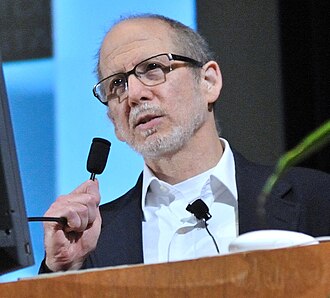
Bert Vogelstein
Clayton Professor of Oncology; Co-Director, Ludwig Center; HHMI Investigator
Cancer geneticsColorectal tumorigenesisLiquid biopsy
Bert Vogelstein is the most-cited scientist in cancer genetics: he mapped how colorectal cancer develops and founded the field of cancer genome sequencing and blood-based detection.
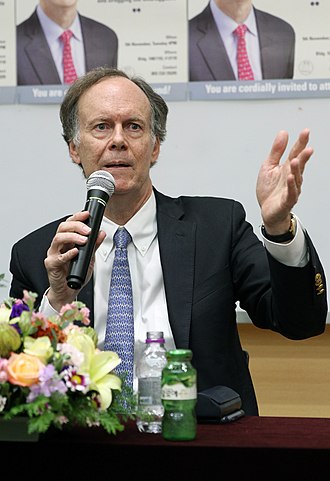
William G. Kaelin Jr.
Sidney Farber Professor of Medicine; HHMI Investigator
VHL and HIF biologyKidney cancerOxygen sensing
William Kaelin is the Nobel laureate whose work on VHL and HIF-2α led directly to belzutifan.
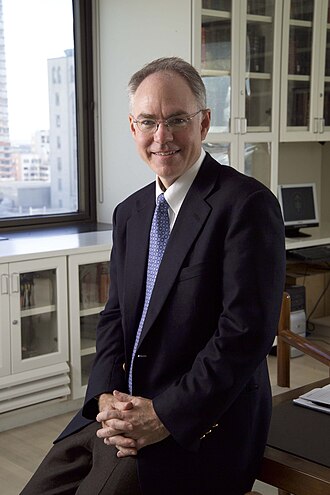
Charles L. Sawyers
Chair, Human Oncology and Pathogenesis Program; HHMI Investigator
Prostate cancerKinase inhibitor resistanceAndrogen receptor biology
Co-developed imatinib's successor dasatinib and the prostate drug enzalutamide, and explained how cancers resist targeted drugs.
Benjamin L. Ebert
President and Chief Executive Officer
Myeloid malignanciesClonal haematopoiesisMolecular glue degraders
Discovered how lenalidomide works, launching the field of molecular-glue degraders, and defined clonal haematopoiesis before leading Dana-Farber.
Feng Zhang
Core Institute Member, Broad; James and Patricia Poitras Professor of Neuroscience, MIT
CRISPR genome editingMolecular toolsDelivery
Pioneer of CRISPR-Cas9 genome editing in human cells, the tool behind cancer dependency screens and edited cell therapies.
Similar pages
- Key paperLimited heterogeneity of known driver gene mutations among the metastases of individual patients with pancreatic cancer
Shares Bert Vogelstein, Johns Hopkins Hospital / Sidney Kimmel Comprehensive Cancer Center, Memorial Sloan Kettering Cancer Center.
- CompanyBreak Through Cancer
Shares Johns Hopkins Hospital / Sidney Kimmel Comprehensive Cancer Center, Dana-Farber Brigham Cancer Center, Memorial Sloan Kettering Cancer Center.
- Key paperJaiswal: clonal haematopoiesis, the pre-leukaemic clones in most people over 70
Shares Benjamin L. Ebert, Broad Institute of MIT and Harvard, Dana-Farber Brigham Cancer Center.
- Key paperDefining a Cancer Dependency Map: which genes each cancer cell line cannot live without
Shares Broad Institute of MIT and Harvard, CRISPR functional genomics, Dana-Farber Brigham Cancer Center.
- InstitutionLudwig Cancer Research
Shares Johns Hopkins Hospital / Sidney Kimmel Comprehensive Cancer Center, Funding follows fashion, not burden, Memorial Sloan Kettering Cancer Center.
- PersonDaniel K. Ludwig
Shares Johns Hopkins Hospital / Sidney Kimmel Comprehensive Cancer Center, Funding follows fashion, not burden, Memorial Sloan Kettering Cancer Center.
- PersonFrancisca Vazquez
Shares Broad Institute of MIT and Harvard, CRISPR functional genomics.
- PersonDavid H. Koch
Shares Johns Hopkins Hospital / Sidney Kimmel Comprehensive Cancer Center, Funding follows fashion, not burden, Memorial Sloan Kettering Cancer Center.