Loading
journalsJournal
Cancer
Cancer is the American Cancer Society's peer-reviewed clinical journal, publishing across all cancers since 1948 with a focus on epidemiology, survivorship and outcomes.
Also called: Cancer (ACS journal)
Overview
Twice-monthly interdisciplinary journal covering clinical research, epidemiology, health services, survivorship and psychosocial oncology. Publishes many cooperative-group secondary analyses, SEER-based outcome studies and quality-of-life work. Hybrid access via Wiley; sister to CA: A Cancer Journal for Clinicians and Cancer Cytopathology.
Publisher
Wiley · American Cancer Society
Scope
clinical oncology
Access model
hybrid
Founded
1948
ISSN
0008-543X
observational20262 citations
Cervical cancer elimination in India: Repurposing diagnostics, vaccination, and accelerating policy for the 2030 target
One treatment page on OnCo cites this paper by its DOI; this record gives the citation a page of its own so a reader can follow it without leaving OnCo. Read the abstract above alongside the citing page listed under Related; the record was created automatically from the Europe PMC entry and its figures have not been checked by hand.
observational2021changed practice46 citations
Activity of sirolimus in progressive epithelioid haemangioendothelioma (Italian Rare Cancer Network)
Sirolimus is the first-choice systemic therapy for progressing EHE, ideally started before pleural or peritoneal effusions develop.
review2020537 citations
MASCC/ISOO clinical practice guidelines for the management of mucositis secondary to cancer therapy
Four technology pages on OnCo cite this paper by its DOI; this record gives the citation a page of its own so a reader can follow it without leaving OnCo. Read the abstract above alongside the citing pages listed under Related; the record was created automatically from the Europe PMC entry and its figures have not been checked by hand.
guideline202061 citations
The Chicago Consensus on peritoneal surface malignancies: management of appendiceal neoplasms
The standard-of-care rows on the appendiceal pages, particularly who is referred for cytoreductive surgery and who receives chemotherapy, follow this consensus and the NCCN appendiceal section.
observational201940 citations
Regional differences in gallbladder cancer pathogenesis: insights from a multi-institutional comparison of tumor mutations
Regional biology is real but partial: exposures and age differ, some genes differ, and SMAD4 loss emerges as the shared bad-prognosis marker. It is the paper behind the MSK 2018 gallbladder study on cBioPortal (gbc_msk_2018).
observational2019112 citations
Update on triple-negative breast cancer disparities for the United States: A population-based study from the United States Cancer Statistics database, 2010 through 2014
The most recent national figure behind the statement that Black women in the United States have about twice the incidence of triple-negative breast cancer; trial enrolment has not matched it.
translational2017changed practice784 citations
Confirmation of ProMisE: a genomics-based clinical classifier for endometrial cancer
Molecular classification of every endometrial cancer, now embedded in the WHO classification and the ESGO/ESTRO/ESP guideline, rests on ProMisE; it decides adjuvant therapy and identifies candidates for immunotherapy.
observational2017changed practice88 citations
Emergency use of uridine triacetate for the prevention and treatment of life-threatening 5-fluorouracil and capecitabine toxicity
This is the evidence behind the December 2015 US approval of Vistogard, the only antidote for fluorouracil or capecitabine overdose and early life-threatening toxicity. Its main practical message is the 96-hour window: the drug must be started before toxicity is fully established.
translational2016333 citations
Biliary cancer: utility of next-generation sequencing for clinical management
The clearest early head-to-head of the three biliary sites on one platform: for gallbladder cancer it made HER2 the target to test for and showed that IDH and FGFR inhibitors would rarely apply.
basic201519 citations
Solitomab, an epithelial cell adhesion molecule/CD3 bispecific antibody (BiTE), is highly active against primary chemotherapy-resistant ovarian cancer cell lines in vitro and fresh tumor cells ex vivo
One cancer page on OnCo cites this paper by its DOI; this record gives the citation a page of its own so a reader can follow it without leaving OnCo. Read the abstract above alongside the citing page listed under Related; the record was created automatically from the Europe PMC entry and its figures have not been checked by hand.
observational2008585 citations
Sites of distant recurrence and clinical outcomes in patients with metastatic triple-negative breast cancer: high incidence of central nervous system metastases
The 13.3-month median is the pre-immunotherapy, pre-antibody-drug conjugate benchmark against which first-line trials now reporting medians near two years are measured; the brain metastasis rate is why trials that exclude active brain disease leave the question unanswered.
observational20071,595 citations
Descriptive analysis of estrogen receptor (ER)-negative, progesterone receptor (PR)-negative, and HER2-negative invasive breast cancer, the so-called triple-negative phenotype: a population-based study from the California cancer Registry
The first registry-scale description of the disparity that every later triple-negative disparity paper confirms; the phrase so-called triple-negative phenotype in the title marks the moment the term entered population science.
rct20031,683 citations
Congestive heart failure in patients treated with doxorubicin: a retrospective analysis of three trials
One pairing page on OnCo cites this paper by its DOI; this record gives the citation a page of its own so a reader can follow it without leaving OnCo. Read the abstract above alongside the citing page listed under Related; the record was created automatically from the Europe PMC entry and its figures have not been checked by hand.
observational200277 citations
Paget disease of the nipple as a marker of multifocal, higher-risk underlying breast cancer
Breast MRI to map disease and central excision with clear margins or mastectomy, rather than removing the nipple alone, follow from findings like these.
observational1981changed practice1,095 citations
Masaoka staging: follow-up study of thymomas with special reference to their clinical stages
Whether a thymoma is called stage I or stage III, and hence whether radiotherapy follows surgery, still traces back to this scheme.
observational1976changed practice186 citations
Carcinoma of the gallbladder: staging, treatment, and prognosis
Depth of invasion has been the organising principle of gallbladder cancer staging ever since, through the TNM editions to the 2017 T2a/T2b split; and the observation that most cases are incidental was already true fifty years ago.
observational1976changed practice494 citations
Kadish staging: olfactory neuroblastoma, a clinical analysis of 17 cases
The stage on an esthesioneuroblastoma page or pathology report is almost always a Kadish stage, and treatment intensity follows it.
Ali Taher
Director, Naef K. Basile Cancer Institute, American University of Beirut Medical Center
HaematologyOncologyCancer centre management
Physician who directs the Naef K. Basile Cancer Institute, the multidisciplinary cancer centre of the American University of Beirut Medical Center in Lebanon.
Andreas du Bois
Director of Gynecology and Gynecologic Oncology, Kliniken Essen-Mitte; Chair, AGO Study Group
Ovarian cancer surgeryCooperative-group trialsCytoreductive surgery
Surgeon who chairs the German AGO group and led DESKTOP III, proving secondary surgery can extend survival in selected relapsed ovarian cancer.
Ellen L. Stovall
Cancer survivor and advocate; chief executive of the National Coalition for Cancer Survivorship from 1992 to 2008
Cancer survivorshipQuality of cancer carePatient advocacy
Led the survivorship movement's organisation for sixteen years and co-edited the Institute of Medicine report that defined what survivorship care is.
Emil J Freireich
Pioneer of combination chemotherapy and the cure of childhood leukaemia
Acute lymphoblastic leukaemiaCombination chemotherapySupportive care
At the NCI in the early 1960s he and Emil Frei gave children four drugs at once, VAMP, against fierce opposition, and turned a leukaemia almost no child survived into a curable one. He also worked out platelet transfusion.
Geraline Leusink
Voorzitter Raad van Bestuur (Chair of the Executive Board), Rijnstate
Hospital governanceHealth management
Chair of the executive board of Rijnstate, the teaching hospital serving Arnhem and the surrounding region of Gelderland.
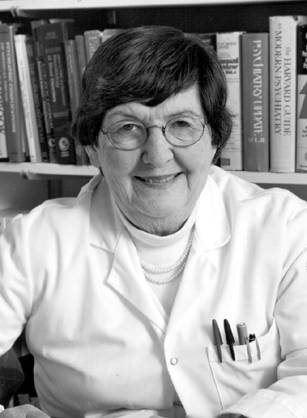
Jimmie Holland
Founder of psycho-oncology
Psycho-oncologyPsychiatryDistress screening
A psychiatrist who set up the first full-time psychiatry service in a cancer hospital at Memorial Sloan Kettering in 1977, founded the field's societies and journal, and made distress a vital sign in cancer care.
Jürgen Debus
Head of Radiation Oncology, Heidelberg University Hospital; Director, HIT Heidelberg Ion-Beam Therapy Center
Particle therapyCarbon-ion radiotherapyRadiation oncology
Jürgen Debus leads Europe's pioneering heavy-ion therapy centre.
Mark Middleton
Director, Oxford Cancer (co-director with Tim Elliott and Adam Mead)
Experimental cancer medicineMelanomaUpper gastrointestinal cancer
Medical oncologist who co-directs Oxford Cancer, the city-wide partnership between the University of Oxford and Oxford University Hospitals.
Roberto de Almeida Gil
Director-General
Medical oncologyCancer control policyPublic health
Director-General of Brazil's Instituto Nacional de Câncer (INCA), the Ministry of Health body that coordinates national cancer control.
Silvia Stacchiotti
Medical Oncologist, Adult Mesenchymal Tumour and Rare Cancer Unit, Fondazione IRCCS Istituto Nazionale dei Tumori, Milan
Rare sarcomasHistology-driven therapyChordoma and desmoid tumours
Italian oncologist who leads histology-specific trials in ultra-rare sarcomas and the Connective Tissue Oncology Society.
Sirkku Jyrkkiö
Representative of Turku University Hospital Cancer Centre to the Organisation of European Cancer Institutes
Cancer centre representation (OECI)
Sirkku Jyrkkiö represents Turku University Hospital Cancer Centre in the Organisation of European Cancer Institutes, which lists the centre among its members in Finland.
Sumit Gupta
Staff Oncologist and Senior Scientist, The Hospital for Sick Children (SickKids), Toronto
Paediatric acute lymphoblastic leukaemiaImmunotherapyHealth outcomes research
Led COG AALL1731, which showed adding blinatumomab to chemotherapy improves survival for children with standard-risk leukaemia.

Susan Love
Breast surgeon, author and founder of the Army of Women
Breast surgeryBreast cancer preventionPatient education
Her Breast Book gave women the information to question their surgeons; she co-founded the National Breast Cancer Coalition and in 2008 recruited hundreds of thousands of women into research through the Army of Women.
Taofeek K. Owonikoko
Executive Director, University of Maryland Marlene and Stewart Greenebaum Comprehensive Cancer Center
Medical oncologyThoracic oncologyCancer centre leadership
Medical oncologist who is Executive Director of the NCI-designated Greenebaum Comprehensive Cancer Center at the University of Maryland in Baltimore.
Virginia Sun
Professor, Population Sciences and Surgery, City of Hope; SWOG Executive Officer, Palliative Care and Survivorship
SurvivorshipPalliative careSymptom science
Virginia Sun is a nurse scientist who leads SWOG's supportive care and survivorship research.
observationalCancer 20262 citations
Cervical cancer elimination in India: Repurposing diagnostics, vaccination, and accelerating policy for the 2030 target
One treatment page on OnCo cites this paper by its DOI; this record gives the citation a page of its own so a reader can follow it without leaving OnCo. Read the abstract above alongside the citing page listed under Related; the record was created automatically from the Europe PMC entry and its figures have not been checked by hand.
observationalCancer 2021changed practice46 citations
Activity of sirolimus in progressive epithelioid haemangioendothelioma (Italian Rare Cancer Network)
Sirolimus is the first-choice systemic therapy for progressing EHE, ideally started before pleural or peritoneal effusions develop.
reviewCancer 2020537 citations
MASCC/ISOO clinical practice guidelines for the management of mucositis secondary to cancer therapy
Four technology pages on OnCo cite this paper by its DOI; this record gives the citation a page of its own so a reader can follow it without leaving OnCo. Read the abstract above alongside the citing pages listed under Related; the record was created automatically from the Europe PMC entry and its figures have not been checked by hand.
guidelineCancer 202061 citations
The Chicago Consensus on peritoneal surface malignancies: management of appendiceal neoplasms
The standard-of-care rows on the appendiceal pages, particularly who is referred for cytoreductive surgery and who receives chemotherapy, follow this consensus and the NCCN appendiceal section.
observationalCancer 201940 citations
Regional differences in gallbladder cancer pathogenesis: insights from a multi-institutional comparison of tumor mutations
Regional biology is real but partial: exposures and age differ, some genes differ, and SMAD4 loss emerges as the shared bad-prognosis marker. It is the paper behind the MSK 2018 gallbladder study on cBioPortal (gbc_msk_2018).
translationalCancer 2017changed practice784 citations
Confirmation of ProMisE: a genomics-based clinical classifier for endometrial cancer
Molecular classification of every endometrial cancer, now embedded in the WHO classification and the ESGO/ESTRO/ESP guideline, rests on ProMisE; it decides adjuvant therapy and identifies candidates for immunotherapy.
observationalCancer 2017changed practice88 citations
Emergency use of uridine triacetate for the prevention and treatment of life-threatening 5-fluorouracil and capecitabine toxicity
This is the evidence behind the December 2015 US approval of Vistogard, the only antidote for fluorouracil or capecitabine overdose and early life-threatening toxicity. Its main practical message is the 96-hour window: the drug must be started before toxicity is fully established.
translationalCancer 2016333 citations
Biliary cancer: utility of next-generation sequencing for clinical management
The clearest early head-to-head of the three biliary sites on one platform: for gallbladder cancer it made HER2 the target to test for and showed that IDH and FGFR inhibitors would rarely apply.
5 more, oldest last
Solitomab, an epithelial cell adhesion molecule/CD3 bispecific antibody (BiTE), is highly active against primary chemotherapy-resistant ovarian cancer cell lines in vitro and fresh tumor cells ex vivoCongestive heart failure in patients treated with doxorubicin: a retrospective analysis of three trialsPaget disease of the nipple as a marker of multifocal, higher-risk underlying breast cancerMasaoka staging: follow-up study of thymomas with special reference to their clinical stagesKadish staging: olfactory neuroblastoma, a clinical analysis of 17 cases
Similar pages
- JournalCA: A Cancer Journal for Clinicians
Shares Cancer cytopathology, American Cancer Society (ACS), SEER (Surveillance, Epidemiology, and End Results).
- TargetARID1A
Shares Regional differences in gallbladder cancer pathogenesis: insights from a multi-institutional comparison of tumor mutations, Biliary cancer: utility of next-generation sequencing for clinical management.
collections
people
key papers
Activity of sirolimus in progressive epithelioid haemangioendothelioma (Italian Rare Cancer Network)Biliary cancer: utility of next-generation sequencing for clinical managementCervical cancer elimination in India: Repurposing diagnostics, vaccination, and accelerating policy for the 2030 targetConfirmation of ProMisE: a genomics-based clinical classifier for endometrial cancerCongestive heart failure in patients treated with doxorubicin: a retrospective analysis of three trialsEmergency use of uridine triacetate for the prevention and treatment of life-threatening 5-fluorouracil and capecitabine toxicityKadish staging: olfactory neuroblastoma, a clinical analysis of 17 casesMasaoka staging: follow-up study of thymomas with special reference to their clinical stagesMASCC/ISOO clinical practice guidelines for the management of mucositis secondary to cancer therapyPaget disease of the nipple as a marker of multifocal, higher-risk underlying breast cancerRegional differences in gallbladder cancer pathogenesis: insights from a multi-institutional comparison of tumor mutationsSolitomab, an epithelial cell adhesion molecule/CD3 bispecific antibody (BiTE), is highly active against primary chemotherapy-resistant ovarian cancer cell lines in vitro and fresh tumor cells ex vivoThe Chicago Consensus on peritoneal surface malignancies: management of appendiceal neoplasms