Loading
institutionsInstitution

Vanderbilt-Ingram Cancer Center
Tennessee's NCI comprehensive centre, birthplace of the My Cancer Genome knowledge base and the molecular subtypes of triple-negative breast cancer.
Also called: VICC
Overview
NCI-designated in 1995 and comprehensive since 2001, Vanderbilt-Ingram serves Tennessee and the mid-South. William Pao, who had discovered the EGFR T790M resistance mutation, launched My Cancer Genome here in 2011, one of the first public precision-oncology knowledge bases. Brian Lehmann and Jennifer Pietenpol defined the molecular subtypes of triple-negative breast cancer, Justin Balko studies immunotherapy in TNBC, and Douglas Johnson's work on immune-related adverse events shaped their management. The Southern Community Cohort Study, run from Vanderbilt, is a major resource on cancer disparities in the South. Kimryn Rathmell moved from chairing medicine here to directing the NCI in 2023.
Location
Nashville, TN, US
Type
cancer center · Vanderbilt University
Website
Newsweek 2026 oncology rank
Not in top 300 listing used
NCI designation
comprehensive
OnCo score
#70 · 45 points (0 Newsweek + 15 NCI + 30 from 15 linked objects) · ranking
Research output
From OpenAlex, oncology works in the last five years (2022 to 2026, current year in progress); counted on 2026-09-17.
Matched to Vanderbilt-Ingram Cancer Center, including child institutions. 269 works · 9,027 citations · 63% open access · 17% clinical trials · 1% reviews.
Oncology works per year
772022
652023
572024
382025
322026
Most works
- Cathy Eng68 works
- Josep Tabernero28 works
- Olalekan O. Oluwole27 works
- Takayuki Yoshino25 works
- Jordan Berlin24 works
- Sara Lonardi24 works
- Eric Van Cutsem18 works
- Arvind Dasari16 works
- Alberto Sobrero13 works
- Brian I. Rini13 works
Most cited
- Precision oncology (My Cancer Genome)
- TNBC subtypes
- Immune-related adverse events
- Southern Community Cohort
Brian I. Rini
Chief of Clinical Trials, Vanderbilt-Ingram Cancer Center; Ingram Professor of Cancer Research
Renal cell carcinomaImmunotherapy combinationsAntiangiogenic therapy
Led KEYNOTE-426, which made pembrolizumab plus axitinib a first-line standard for kidney cancer.
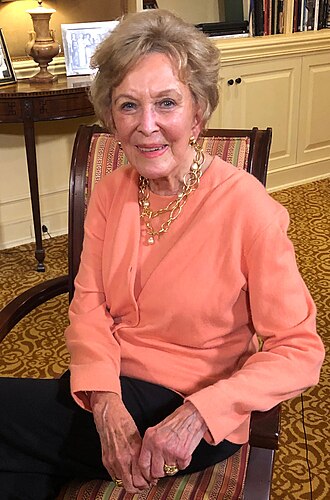
Martha Rivers Ingram
Businesswoman whose family's 1999 gift named Vanderbilt-Ingram Cancer Center in memory of E. Bronson Ingram
Cancer centre buildingFamily philanthropy
In 1999 the Ingram family made what Vanderbilt calls a transformational gift in honour of the late E. Bronson Ingram; the centre took the family's name and became Tennessee's leading cancer research centre.
translationalNature Communications 2021224 citations
Multi-omics analysis identifies therapeutic vulnerabilities in triple-negative breast cancer subtypes
It gives the PD-L1-negative mesenchymal subtype, the group immunotherapy leaves behind, a mechanistic route back to immune visibility, and explains why immune infiltration and subtype are coupled.
translationalPLoS One 20161,120 citations
Refinement of Triple-Negative Breast Cancer Molecular Subtypes: Implications for Neoadjuvant Chemotherapy Selection
The first evidence that molecular subtype predicts chemotherapy response in triple-negative disease, and the origin of the observation that the immune signal in these tumours is real and measurable, which tumour-infiltrating lymphocyte scoring later turned into a prognostic tool.
observationalJAMA 2014changed practice1,369 citations
Using multiplexed assays of oncogenic drivers in lung cancers to select targeted drugs
It is the study that made multiplex testing standard practice in lung adenocarcinoma, by showing both that most tumours have a driver and that finding it changes what patients receive.
translationalJournal of Clinical Investigation 2011changed practice4,328 citations
Identification of human triple-negative breast cancer subtypes and preclinical models for selection of targeted therapies
The vocabulary used on the triple-negative page (basal-like 1 and 2, mesenchymal, luminal androgen receptor, immunomodulatory) comes from this paper; it made triple-negative breast cancer several diseases with several possible drugs rather than one disease with none.
Similar pages
- InstitutionUniversity of Arizona Cancer Center
Shares Trials do not represent the people who get cancer, National Cancer Institute (NIH), Melanoma, Colorectal cancer.
- IdeaPick the laboratory model that matches the patient, not the one to hand
Shares Trials do not represent the people who get cancer, National Cancer Institute (NIH), Comprehensive genomic profiling.
- PersonHelena A. Yu
Shares Osimertinib, EGFR, Non-small-cell lung cancer.
- PersonLecia V. Sequist
Shares Using multiplexed assays of oncogenic drivers in lung cancers to select targeted drugs, EGFR, Non-small-cell lung cancer.
- TermRash and skin toxicity (acneiform rash, paronychia)
Shares Immune-related adverse events (irAEs), Osimertinib, Colorectal cancer.
- TermEGFR exon 19 deletion & L858R
Shares Trials do not represent the people who get cancer, Osimertinib, EGFR, Non-small-cell lung cancer.
- InstitutionNational Taiwan University Hospital
Shares Osimertinib, EGFR, Colorectal cancer, Non-small-cell lung cancer.
- InstitutionUniversity of Hawai'i Cancer Center
Shares Trials do not represent the people who get cancer, National Cancer Institute (NIH), Non-small-cell lung cancer.
cancers
technologies
targets
drugs
ApprovedSmall-molecule kinase inhibitor (EGFR)
Osimertinib · Tagrisso
institutions
terms
people
bottlenecks
key papers
Identification of human triple-negative breast cancer subtypes and preclinical models for selection of targeted therapiesMulti-omics analysis identifies therapeutic vulnerabilities in triple-negative breast cancer subtypesRefinement of Triple-Negative Breast Cancer Molecular Subtypes: Implications for Neoadjuvant Chemotherapy SelectionUsing multiplexed assays of oncogenic drivers in lung cancers to select targeted drugs