Loading
institutionsInstitution
Kyoto University Hospital
The university where Tasuku Honjo discovered PD-1 and Shinya Yamanaka created iPS cells; its hospital leads Japanese immunotherapy and cell therapy research.
Also called: 京都大学医学部附属病院Kyoto University Cancer Center
Overview
Kyoto University Hospital is the clinical arm of a university whose Graduate School of Medicine produced two Nobel prizes relevant to cancer: Tasuku Honjo's discovery of PD-1 (2018 Nobel), which led to nivolumab, and Shinya Yamanaka's induced pluripotent stem cells (2012 Nobel), now the basis of iPS-derived NK and T-cell products from the Center for iPS Cell Research and Application. The hospital runs Japan's largest early-phase immunotherapy programme with Ono Pharmaceutical partnerships, a leading haematology and transplant department, hepatobiliary and pancreatic surgery, and a core institution role in JCOG and WJOG trials. Its Institute for Advancement of Clinical and Translational Science supports investigator-initiated trials, and Kyoto's cancer research includes the Kyoto Prize-associated work on immune checkpoint biology.
Location
Kyoto, JP
Type
hospital · Kyoto University
Website
Newsweek 2026 oncology rank
Not in top 300 listing used
OnCo score
#208 · 28 points (0 Newsweek + 0 NCI + 28 from 14 linked objects) · ranking
Research output
From OpenAlex, oncology works in the last five years (2022 to 2026, current year in progress); counted on 2026-09-15.
Matched to Kyoto University Hospital, including child institutions. 251 works · 1,942 citations · 71% open access · 16% clinical trials · 1% reviews.
Oncology works per year
492022
522023
542024
462025
502026
Most works
- Yasuyuki Arai26 works
- Tomoyasu Jo25 works
- Momoko Nishikori18 works
- Masakazu Toi16 works
- Kouhei Yamashita15 works
- Akifumi Takaori‐Kondo15 works
- Manabu Muto15 works
- Hironori Haga15 works
- Koya Hida14 works
- Kazutaka Obama14 works
Most cited
- PD-1 biology and immunotherapy
- iPS-derived cell therapy
- Haematology
- Hepatobiliary-pancreatic surgery
Akifumi Takaori
Director of Kyoto University Hospital
HematologyLeukemiaHematopoietic stem cell transplantation
Hematologist who directs Kyoto University Hospital, one of Japan's leading academic medical centres.
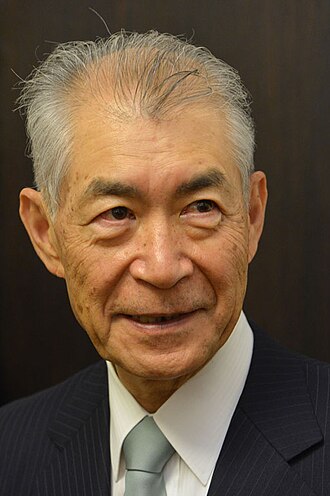
Tasuku Honjo
Immunologist who discovered PD-1 and opened the way to anti-PD-1 therapy
ImmunologyPD-1Checkpoint immunotherapy
He discovered the PD-1 molecule on T cells in 1992 and showed it acts as a brake on immune attack. Blocking it produced nivolumab and pembrolizumab, now used across dozens of cancers; Nobel Prize 2018.
Similar pages
- CompanyOnc.AI
Shares PD-L1, PD-1, Immune checkpoint inhibitors, Non-small-cell lung cancer.
- PersonHaruhiko Fukuda
Shares Japan Clinical Oncology Group (JCOG), Gastric & gastro-oesophageal junction cancer, Non-small-cell lung cancer.
- TechnologyNK cell therapy and CAR-NK
Shares CAR-NK & CAR-macrophage, Allogeneic (off-the-shelf) cell therapy, Acute myeloid leukaemia.
- Key paperCheckMate 026: first-line nivolumab in stage IV or recurrent non-small-cell lung cancer
Shares PD-L1, Nivolumab, PD-1, Immune checkpoint inhibitors.
- CompanyONK Therapeutics
Shares CAR-NK & CAR-macrophage, Allogeneic (off-the-shelf) cell therapy.
- TrialCheckMate 057
Shares PD-L1, Nivolumab, PD-1, Immune checkpoint inhibitors.
- IdeaExtended-interval immunotherapy: give checkpoint inhibitors every 8-12 weeks once stable
- IdeaRandomised trials of stopping immunotherapy after one year versus continuing
cancers
fronts
technologies
targets
drugs
ApprovedMonoclonal antibody (anti-PD-1)
Nivolumab · Opdivo / Opdivo Qvantig (SC)